

Do you ever replay a conversation in your head long after it’s over? Do you practice what you’ll say before you raise your hand, and then not raise it at all? Have you ever typed a message, deleted it, typed it again, and then decided not to send it?
If you nodded at any of those, welcome. You are in the right place.
Overthinking happens when your brain works a little too hard at keeping you safe. It tries to spot every possible problem before it happens: What if they laugh? What if I get it wrong? What if everyone stares? Your brain means well. It is like a very loyal guard dog that barks at every leaf.
The trouble is, all that barking can keep you from the good stuff: new friends, fun clubs, speaking up, trying things, and finding out what you are really great at.
Here is the secret most people never tell you: brave people feel nervous too. Their hearts pound. Their hands get sweaty. The difference is that they do the thing anyway, usually in small steps. And every small step teaches the guard dog in their head that it can relax a little.
Try this today
You don’t have to stop being nervous to be brave. You just have to take one small step. Pick one tiny thing, like saying good morning to a teacher, and do it once. Then notice: the guard dog barked, and you were okay.
A note for parents and teachers
Overthinking is common in kids and teens, and it is not a flaw. Small, safe, repeatable steps build confidence better than big speeches. Let your child choose the dare, celebrate the attempt rather than the result, and ask what the worry said.
This reading is from Brave Looks Good on You: 100 Little Dares for Kids and Teens Who Overthink by Rehel Jemera Sausa, Soft Roar Books, Book 1. It has 100 safe, kind, doable dares, a Rory story for each section, and a Brave Meter to track progress.
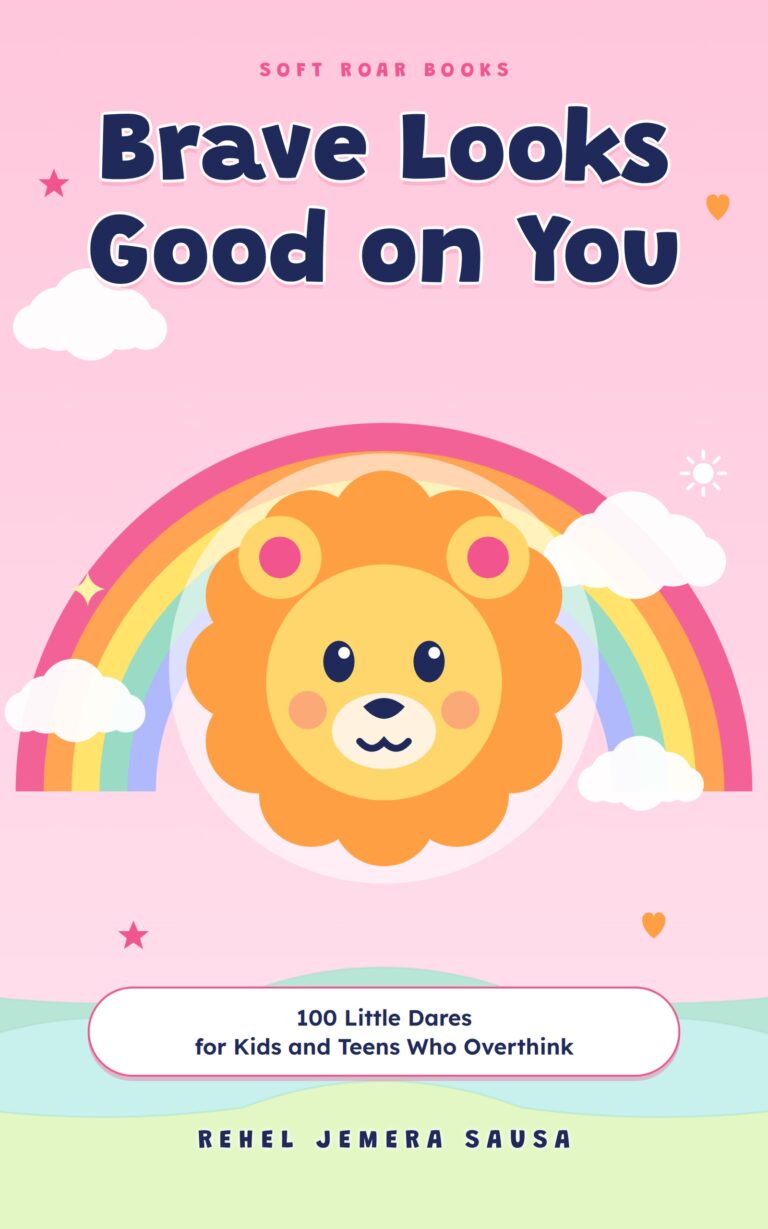
Brave Looks Good on You
100 Little Dares for Kids and Teens Who Overthink
A book of small, brave dares for kids and teens who overthink.
Buy on Amazon