

Da Lat sits high in the Central Highlands of Vietnam, where the air is cool, mist drifts through pine forests and the streets are lined with French-era villas. It is called the City of Eternal Spring, and many visitors come to escape the heat of the lowlands. This guide explains what makes the city special and how to enjoy it at an unhurried pace.
Where Da Lat is
Da Lat lies in Lam Dong Province, in the Central Highlands of Vietnam, at an elevation of about 1,500 meters. The city covers around 390 square kilometers and had a population of roughly a quarter of a million at the end of 2022. It is surrounded by hills, valleys, pine forests and farms, and the roads that climb to it twist through scenery that changes with every turn.
Because of its height, Da Lat feels very different from the coast or the Mekong Delta. Even if you have been sweating in the lowlands, you may find yourself reaching for a jacket by the evening.

The City of Eternal Spring
The highland climate is mild and fresh. Average temperatures range from about 14 to 23 degrees Celsius, and mist often rests in the valleys. The year has two main seasons: a dry season from roughly November to April and a rainy season from May to October. Annual rainfall is around 1,750 to 1,800 millimeters. In the dry season, mornings are clear and bright, and in the rainy season, afternoons are often wet, so plan indoor stops and carry a rain jacket.
- Dry season: layers for cool mornings, sun protection for bright afternoons.
- Rainy season: a waterproof jacket, shoes with grip and extra time for roads.
- All year: a warm sweater, since nights are cool.
A hill station is born
Da Lat was founded as a retreat from the heat. In the 1890s, explorers including the bacteriologist Alexandre Yersin urged the French governor-general of Indochina to create a highland resort. Another explorer, Etienne Tardif, proposed the site where the city now stands. The first hotel was built in 1907, an urban plan was drawn up by the planner Ernest Hebrard, and the town was officially established in 1916.
Europeans came to escape the heat of the coast, and they left villas, boulevards and parks that still shape the city. Walking through the quieter streets, you can see how the architecture mixes European styles with local life.
The railway station
The Da Lat Railway Station, completed in 1938, is a handsome Art Deco building with high, pointed roofs. It was named a national historical monument in 2001. Even if you are not traveling by train, it is worth a visit to admire the design and the old platforms. Take a few minutes to look at the details of the roofline and the windows, and imagine the arrival of travelers in the days when the line was new.
The Crazy House
One of the most unusual buildings in the city is the Crazy House, which opened as a guesthouse in 1990. Its designer, Dang Viet Nga, drew inspiration from nature and has spoken of admiring the Spanish architect Antoni Gaudi. The building looks like a giant tree, with curving stairways, tunnels and rooms shaped like caves. Wear shoes with grip, hold the railings and watch your head, since some passages are narrow and steep. Children usually love it, but take care with very small ones.
The emperor's summer home
The Third Mansion, built between 1933 and 1938, was a summer residence of Emperor Bao Dai, the last emperor of Vietnam. The European-style house is surrounded by flower gardens and now serves as a museum. Visitors can walk through the rooms and see how the family lived. It is a quiet place to learn about a chapter of history, and a pleasant stop for a slow afternoon.
Lakes, schools and churches
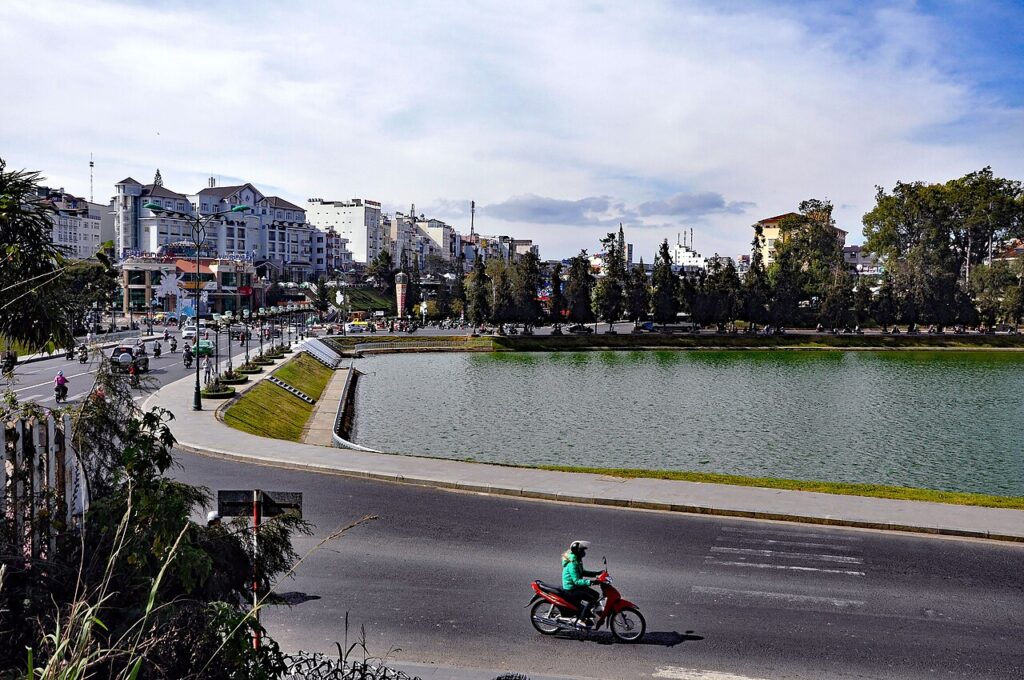
At the center of the city lies Xuan Huong Lake, a favorite place for a slow walk. Paths run along the shore, and cafes and benches offer places to rest. Nearby, the Da Lat Cathedral and the old Lycee Yersin, which opened in 1927, show the French influence on the city. Walk around the lake in the early morning or late afternoon, when the air is cool and the light is soft.
Flowers, tea and vegetables
The cool climate makes Da Lat a center for flowers, vegetables and fruit, and the hills around the city are covered with greenhouses and farms. Orchids and roses are especially famous. Tea is celebrated each year at a tea culture event, and the region is also associated with wine-making and coffee in the wider highlands. If you visit a farm, ask permission before entering, stay on paths and buy something from the grower to support the family.
Food for cool evenings
Da Lat is a good place for warm food on a cool evening. Look for grilled rice paper, a street snack topped with egg, herbs and sauces, and for avocado ice cream, a local favorite. Soups, hot pots and sweet warm drinks are popular, and fresh strawberries and vegetables appear at the markets. The large central market also sells warm clothing, which is handy if you have not packed enough. Eat at busy stalls, ask what is fresh and share dishes to try more.
Festivals and visitors
Throughout the year, Da Lat hosts events such as a flower festival, a cherry blossom celebration, a gong festival and a rain festival. The city welcomes over a million visitors each year, and it is popular with couples and families. Weekends and holidays can be busy, so if you prefer quiet, visit on weekdays and book your stay early.
Staying safe on the roads
Hills, scooters and mist call for care. Drive slowly, avoid riding in the dark and wear a helmet. One of the best-known photo spots, a yellow wall near a windmill-themed cafe, was repainted in 2021 to discourage visitors from standing in the road for selfies. Please take your photographs from a safe place off the road, and look both ways before crossing.
A gentle day in Da Lat
- Early morning: walk around Xuan Huong Lake in the mist.
- Breakfast: try a warm bowl of noodles or a pastry at a small cafe.
- Late morning: visit the railway station and the Crazy House.
- Midday: have lunch and rest while the sun is highest.
- Afternoon: tour the Third Mansion and nearby gardens.
- Evening: wander the central market and try a local snack.
Visiting kindly
Da Lat is a beloved place for many families who live and work here. Keep your voice low in residential streets, ask before photographing people and take your rubbish with you. Choose local cafes and small shops where you can, and be patient and polite when negotiating. A kind visitor leaves the city a little better than they found it.
Waterfalls and pine hills
The hills around Da Lat hide waterfalls, pine forests and viewpoints that are lovely on a clear morning. Some are close to the city, others need a short drive, and a few have steep stairs or slippery rocks. Ask your host which are open and in good condition, wear shoes with grip, and go early to avoid crowds. In the rainy season, water levels rise and paths become muddy, so take extra care near the edge.
Traveling with children
Da Lat is an easy city for families because the air is cool and many attractions are gentle. Children enjoy the lake, the flower gardens and the playful shapes of the Crazy House. Keep little hands close on stairs and near roads, bring a sweater for everyone and plan rest breaks in cafes. A relaxed itinerary with one main outing per morning and one per afternoon leaves room for naps and ice cream.
Packing for a cool highland stay
Travelers are often surprised by how cool Da Lat can be. Pack a light jacket, a warm sweater, long trousers and closed shoes, and add a scarf if you feel the cold. A compact umbrella or rain jacket is useful in any season. If you forget something, the central market sells warm clothes, but it is nicer to arrive prepared.
Coffee and slow cafes
Cafes are part of daily life in Da Lat, and many offer views of pine hills or quiet gardens. Order a local coffee or a warm tea, and ask the staff about the beans or leaves. A long cafe morning is a perfectly good plan, especially on a misty day when the view disappears and the rain taps on the roof.
Find it on the map
- Check opening details and ticket arrangements on Google Maps before you go.
- Bring a warm layer and a rain jacket, whatever the season.
- Wear shoes with grip for steep paths and stairs at the Crazy House.
- Take photographs from safe places, not in the middle of the road.
- Check the weather and any local news the day before, and read recent Google Maps reviews for current conditions.
- Carry water, sun protection and small change, and wear comfortable shoes.
- Dress modestly for temples and shrines: shoulders and knees covered.
Take your time. Do not hurry from one stop to the next. Sit down, look slowly, and let yourself appreciate what is in front of you. A place seen slowly is remembered for much longer.
Sources
Edited by Rehel Jemera Sausa