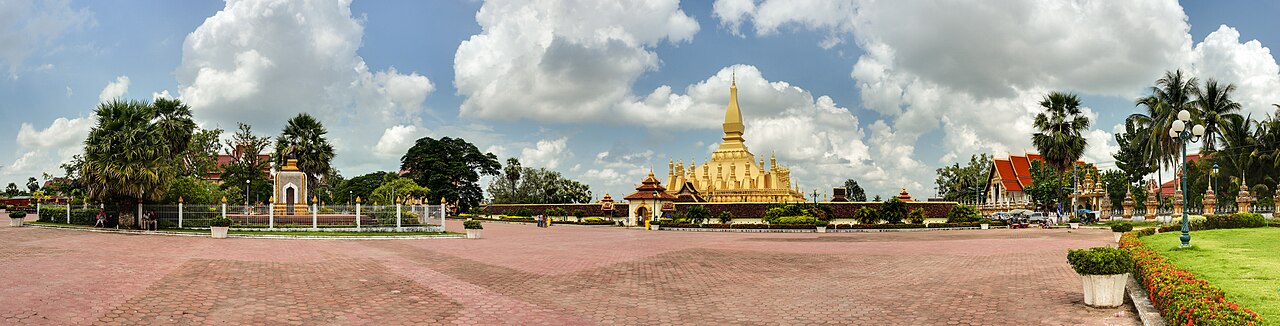
Pha That Luang is the most important monument in Laos, a golden stupa that rises above the capital and appears on the national emblem. Vientiane is a calm city by the standards of Southeast Asia, and the stupa is best seen without hurry, with covered shoulders and knees, a bottle of water and a free morning.

A monument that stands for a nation
Pha That Luang is a large Buddhist stupa on the edge of central Vientiane. Its golden spire is the symbol of Laos, and it is also the site of one of the biggest religious festivals in the country, held every year around the full moon of the twelfth lunar month, usually in November. Historians believe a shrine stood on the site much earlier, and the present structure has been rebuilt and restored more than once, most notably in the twentieth century.
The name means the Great Stupa. When you stand in front of it, you will see why. The tower rises in tiers, narrowing toward the top, and the gold catches the light in a way that changes through the day.
What to expect when you arrive
The stupa stands in a wide courtyard, surrounded by a cloister wall and two temples. You enter the grounds through a gate, walk across open paving, and approach the monument from the side. There is not much shade in the courtyard, so the sun can feel strong in the middle of the day.
Visitors usually walk around the outside of the stupa. The interior is generally not open to the public, so the experience is about the exterior, the proportions and the atmosphere. At times, parts of the monument may be covered by scaffolding during restoration, so check for recent photographs if you are unsure how it looks at the moment.
Watching the life around it
Pha That Luang is not just a monument. It is a place where people come to pray, to make merit and to meet. You may see families lighting incense, monks walking in saffron robes and visitors making small offerings of flowers. Some people release small caged birds as an act of merit, a custom that you may see around the grounds. If you are unsure about the practice, you can simply observe without taking part.
It is a good place to sit for a few minutes on a shaded bench and watch. Notice how people move, how they bow, and how the monument fits into their daily lives.
A slow morning in Vientiane
- Early morning Visit Pha That Luang soon after it opens, when the air is cool and the courtyard is quiet.
- Mid morning Walk to the nearby temples inside and beside the grounds, and sit for a while in their shade.
- Midday Have a long lunch in the city. Lao food is gentle and fresh, with sticky rice, herbs and grilled dishes.
- Afternoon Rest during the heat, or visit a museum or a small cafe.
- Evening Go to the Mekong riverbank, where the air cools and local people gather to walk, exercise and eat.
Other places worth a visit
Vientiane is a compact city, and many of its best sights are close together.
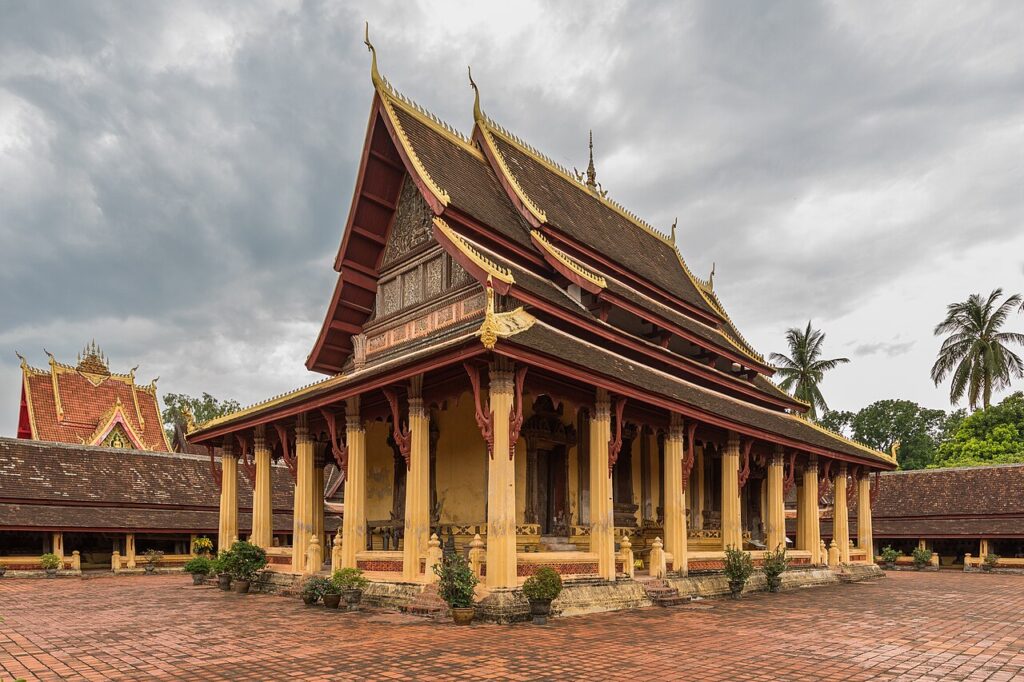
- Wat Si Saket, a temple known for its cloister walls filled with thousands of small Buddha images.
- Patuxai, a large monument inspired by the Arc de Triomphe, with views over the city from the top.
- The Mekong riverside, which is a pleasant place for a sunset walk.
- Local markets, where you can see fruit, textiles and crafts.
Choose one or two of these in addition to the stupa, not all of them.
Getting around
Central Vientiane is flat and fairly easy to move around. Many visitors walk, hire a bicycle, or use local tuk-tuks for longer distances. Agree on the price before you ride, and carry small notes. The pace of traffic is far gentler than in many Asian capitals, but you should still cross roads carefully and look in both directions.
Food and the evening riverside
Lao food is not as well known as Thai food, but it is delicious, and Vientiane is a good place to try it. Sticky rice is eaten with most meals, usually from a small basket. Grilled meats, herb salads and noodle soups are common. If you have dietary needs, ask politely, and consider writing down what you cannot eat.
In the evening, the Mekong riverbank becomes a gathering place. You will often see food stalls, exercise groups and families strolling. It is an easy and relaxed way to end the day, and it gives you a picture of everyday life.
A note about the weather
Vientiane is hot for much of the year. The cool season from about November to February is the most comfortable. March to May is very hot, and the rainy season brings heavy showers in the middle of the year. Bring a hat, sunscreen and water at any time, and keep your schedule light in the heat of the day.
Respectful travel in Laos
Laos is a quiet country with deep Buddhist traditions. Do not touch people on the head, do not point your feet at images of the Buddha, and ask permission before taking photographs of people. Small kindnesses are noticed. A smile, a slight bow and a quiet greeting go a long way.
Why Vientiane suits slow travelers
Vientiane does not try to impress you with size or noise. Its streets are wide, its buildings are low, and the pace of life is gentle enough that you can finish a morning of sightseeing and still feel rested. Many travelers arrive expecting a quick stop between larger destinations and end up staying an extra day, simply because the city is easy to enjoy.
A good habit here is to leave a gap in every afternoon. When the sun is high, take a long lunch, sit by the river or rest in your room. When the light softens, go out again. This rhythm matches the way many local people spend their days.
A few words and small courtesies
A little Lao goes a long way. A warm greeting, a slight bow with palms together and a quiet thank-you are noticed and appreciated. Dress neatly when visiting temples, and be patient if service seems slow, because slow is simply the usual speed. Smiling, rather than complaining, is the best way to get through any small delay.
What to wear and bring
Dress modestly, with shoulders and knees covered, and wear shoes that are easy to take off at temples. Bring a hat, sun protection and water, since the open grounds can be hot and there is little shade. A light scarf is handy for covering shoulders. Check current opening hours, entry arrangements and any festival closures locally before you go.
Traveling with children or older relatives
The grounds are open and mostly flat, but the heat can tire people quickly. Visit in the early morning or late afternoon, take breaks in the shade and keep the plan short. Children may enjoy watching the pigeons, the flowers and the cloisters, while older relatives may prefer a quiet bench and a cool drink. A short visit can be as satisfying as a long one.
Rain, heat and the cool season
Vientiane is hot for much of the year, and the rainy season brings heavy showers that can fill streets. The cool, dry months are the most comfortable, with clearer skies and gentler mornings. Carry a small umbrella that works for sun and rain, and keep your afternoons flexible. A temple in soft rain can be a memorable place, but be careful on wet steps.
Festival days
Pha That Luang is the center of an important annual festival, when many pilgrims and visitors arrive and the area becomes lively with music, stalls and ceremonies. If you want to see it, plan ahead, expect crowds and give yourself plenty of time. If you prefer quiet, choose another week. Both are rewarding, but they offer very different atmospheres.
A last word on Vientiane
Vientiane is not a city of long lists. It is a place for a few good hours: a stupa in the morning light, a slow lunch, a walk by the river in the evening. Let yourself rest between them. A calm day in Vientiane may be the gentlest part of a trip, and the one you remember most warmly.
Find it on the map
- Cover your shoulders and knees, and bring a hat and water because the courtyard has little shade.
- Check recent photographs, since parts of the stupa may be under restoration scaffolding.
- Agree on tuk-tuk prices before you ride, and carry small notes.
- Check opening hours and festival dates close to your travel date, since the main festival crowds are large.
- Check the weather and any local news the day before, and read recent Google Maps reviews for current conditions.
- Carry water, sun protection and small change, and wear comfortable shoes.
- Dress modestly for temples and shrines: shoulders and knees covered.
Take your time. Do not hurry from one stop to the next. Sit down, look slowly, and let yourself appreciate what is in front of you. A place seen slowly is remembered for much longer.
Edited by Rehel Jemera Sausa