

Erawan National Park is home to one of the loveliest waterfalls in Thailand, a seven-tier cascade that tumbles through green forest into clear pools. It is a popular day trip from Kanchanaburi, yet it still offers quiet stretches if you start early and walk at an easy pace. This guide explains the falls, the trail and the park, and how to enjoy them safely and kindly.

Where the park lies
Erawan National Park lies in the Tenasserim Hills of Kanchanaburi Province in western Thailand, about 65 to 70 kilometers northwest of Kanchanaburi town by road. It covers roughly 550 square kilometers and was established in 1975 as one of the country's first national parks. Limestone peaks rise to nearly a thousand meters, and the park borders other protected areas, which helps keep the forest and its wildlife healthy.
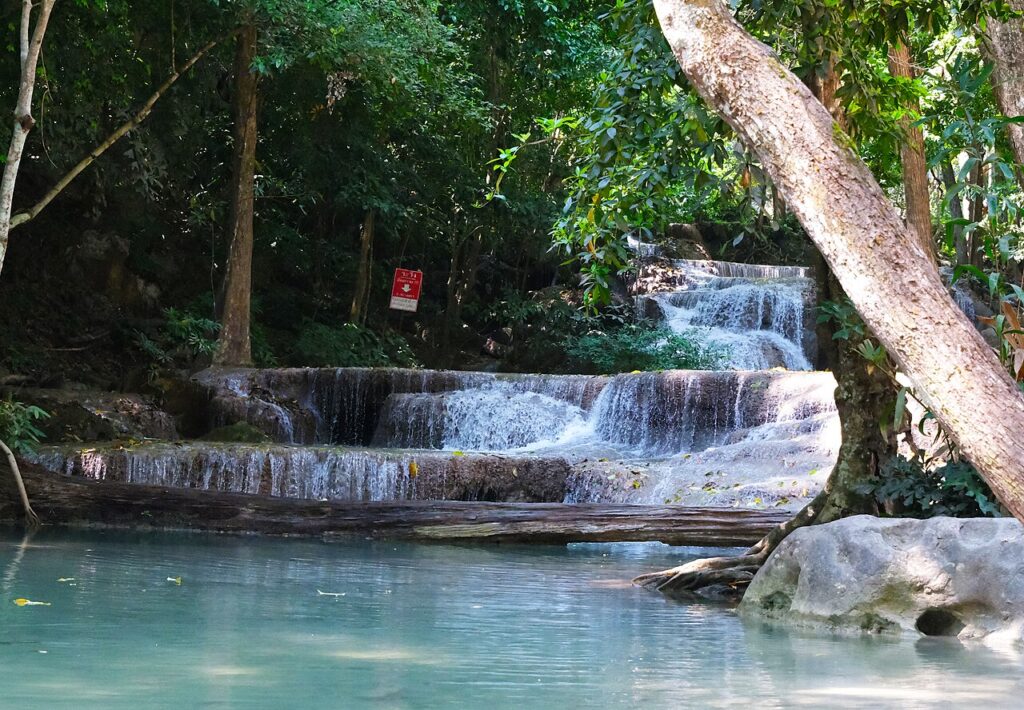
Why it is called Erawan
The falls are named for Erawan, the three-headed white elephant of Hindu mythology. At the top of the falls, water pours from three spouts that resemble the elephant's three heads. It is a small detail, but it gives the place a story. Look for it when you reach the upper tiers, and imagine how the name may have first been given.
Seven tiers of water
The falls descend in seven tiers, each with its own pool, rocks and character. The first six levels are accessible to visitors, and the trail to the top tier is about one and a half kilometers from the trailhead. The path follows the stream, crossing small bridges, climbing steps and passing through shady forest.
- Tier one A wide, easy pool near the start, good for a first look.
- Tiers two and three Shaded pools reached by gentle steps, popular for swimming.
- Tiers four and five The trail becomes steeper and rockier, with fewer visitors.
- Tier six A quieter, more forested level, reached by a rougher path.
- Tier seven The top level, where the three spouts are said to resemble the elephant's heads.
Swimming and the little fish
The pools are cool and clear, and you can swim in many of them. Small fish, often called doctor fish, live in the water and may nibble gently at your skin. It is harmless but surprising, and many visitors laugh when they first feel it. To protect the water, avoid putting on heavy sunscreen or insect repellent right before swimming, and never feed the fish. Check signs for pools where swimming is not allowed.
Walking the trail
Wear shoes with grip, not flip-flops, because rocks and steps are slippery. Start early, carry water and a small bag, and take breaks at the benches along the way. The trail is shaded for most of its length, but humidity can be high, so go at a pace that lets you breathe easily. Turn back if you feel tired. The lower tiers are lovely too.
The caves
The park has four caves, but only one is open to visitors: Phra That Cave, about twelve kilometers from the visitor center, reached by a path from a ranger station. It is around 540 meters long, with chambers, stalactites and formations. Visiting usually requires a guide and a light, so check with rangers before you plan. The other caves are closed to protect them and the visitors.
Wildlife and forest
The forest is mostly mixed deciduous woodland, with patches of dry evergreen forest. Hundreds of bird species have been recorded, along with mammals such as macaques and deer, and smaller reptiles. You will most likely see butterflies, insects and birds, and perhaps monkeys near the lower pools. Keep a distance, never feed wildlife and store food carefully.
Seasons and the best time
The park lies in a rain shadow, so rainfall is lower than in many other mountain areas. The hot season runs from about February to April, the rainy season from May to October, and the cool season from November to January. Water flows best at the end of the rainy season and in the cool season, when pools are full and the forest is green. In the hot season, the flow can be lower, but the shade is welcome. After heavy rain, water can rise quickly, so follow ranger advice and leave the stream if the water changes color or speed.
Getting there
The park is about an hour or so from Kanchanaburi town by road. Many visitors go by shared truck, minivan or a hired driver, and your guesthouse can help arrange transport. If you drive, start early so that you arrive before the crowds and the heat. Weekends and holidays are busy, and the lower pools can be crowded by midday.
Safety and rules
- Stay on marked trails and follow any signs closing pools or paths.
- Do not jump from rocks or swim in fast water.
- Keep children within arm's reach near pools and steps.
- Carry a bag for your rubbish and avoid single-use plastic where possible.
- Do not leave valuables unattended near the water.
What to bring
Pack swimwear, a quick-dry towel, a change of clothes, water, a snack, a hat, sun protection and a rain jacket. A small waterproof bag protects your phone and money, and water shoes with grip help on slippery rocks. Insect repellent is useful on the trail, but remember to avoid it right before swimming.
Combining the falls with Kanchanaburi
Many travelers base themselves in Kanchanaburi town and visit Erawan on a day trip. After a day of waterfalls, a slow evening by the river is a lovely contrast. Our guide to <a href="https://www.brightermornings.online/2026/09/23/5-riverside-cafes-in-kanchanaburi/">five riverside cafes in Kanchanaburi</a> suggests quiet places to rest and watch the light fade.
A relaxed day plan
- Early morning: leave town and reach the park soon after it opens.
- Mid morning: walk the lower tiers and swim in a quiet pool.
- Midday: have a light lunch near the entrance and rest in the shade.
- Early afternoon: climb a few more tiers if you feel strong.
- Late afternoon: return to town and enjoy a slow evening.
Planning your timing
Arriving soon after the park opens usually means a quieter climb and cooler air. The lower pools get busy by late morning, and weekends bring larger groups. Many visitors walk up to the higher tiers first and swim on the way down, when they are warm and the day is at its brightest. Check the park’s opening hours and fees before you go, since they can change.
Food, rubbish and plastic
National parks in Thailand increasingly ask visitors to limit single-use plastic and to carry their rubbish out. Rules about food and bottles at Erawan may change, and you may be asked to declare items at the entrance. Ask a ranger or read the signs before you go, bring a reusable water bottle and pack a small bag for your trash. Leaving the stream clean is the simplest way to say thank you.
Reading the forest as you walk
The trail is more than a path to the top. Notice how the sound of the water changes from one tier to the next, how the light filters through the leaves and how the plants near the stream differ from those higher on the slope. Butterflies often gather on damp stones, and birds call from the canopy. Stop at a bench, stay quiet for a minute and let the forest settle around you.
Pacing for children and older walkers
You do not need to reach the top to enjoy Erawan. The lower tiers are easier to reach and have lovely pools, so families can spend most of the day there. Set a turning point before you start, carry snacks and water, and be ready to change plans if someone is tired. For older walkers, the benches along the trail make good resting places, and walking poles can help on the steps.
Staying overnight
Basic accommodation and camping may be available in or near the park, though facilities and booking arrangements change. Many travelers stay in Kanchanaburi town instead and make the trip as a day excursion. If you want to stay near the park, ask the park office or your guesthouse about current options, and do not assume that food or supplies will be available late in the evening.
A kind closing note
Erawan is popular because it is beautiful, and its beauty depends on the way visitors behave. Stay on the trail, keep your voice low and leave no trace. If you do that, the falls will remain a calm place for those who come after you.
Find it on the map
- Check park notices, trail conditions and water levels before you go.
- Wear shoes with good grip, not flip-flops.
- Bring water, a towel, a change of clothes and a waterproof bag.
- Follow ranger advice if the weather changes.
- Check the weather and any local news the day before, and read recent Google Maps reviews for current conditions.
- Carry water, sun protection and small change, and wear comfortable shoes.
- Dress modestly for temples and shrines: shoulders and knees covered.
Take your time. Do not hurry from one stop to the next. Sit down, look slowly, and let yourself appreciate what is in front of you. A place seen slowly is remembered for much longer.
Edited by Rehel Jemera Sausa