

Kyoto in autumn is one of the most beautiful sights in Japan, and also one of the most crowded. The way to enjoy it is not to chase every famous spot, but to choose a few places, go early, walk slowly and leave room for tea, rest and surprises.

The old capital
Kyoto was the capital of Japan for more than a thousand years, from 794 until 1869, and it still holds a remarkable number of temples, shrines, gardens and traditional wooden houses. Seventeen of its monuments are listed together as UNESCO World Heritage Sites, and the city has around two thousand temples and shrines in total. You could not see them all in a lifetime, so the trick is to choose with care.
When the leaves turn
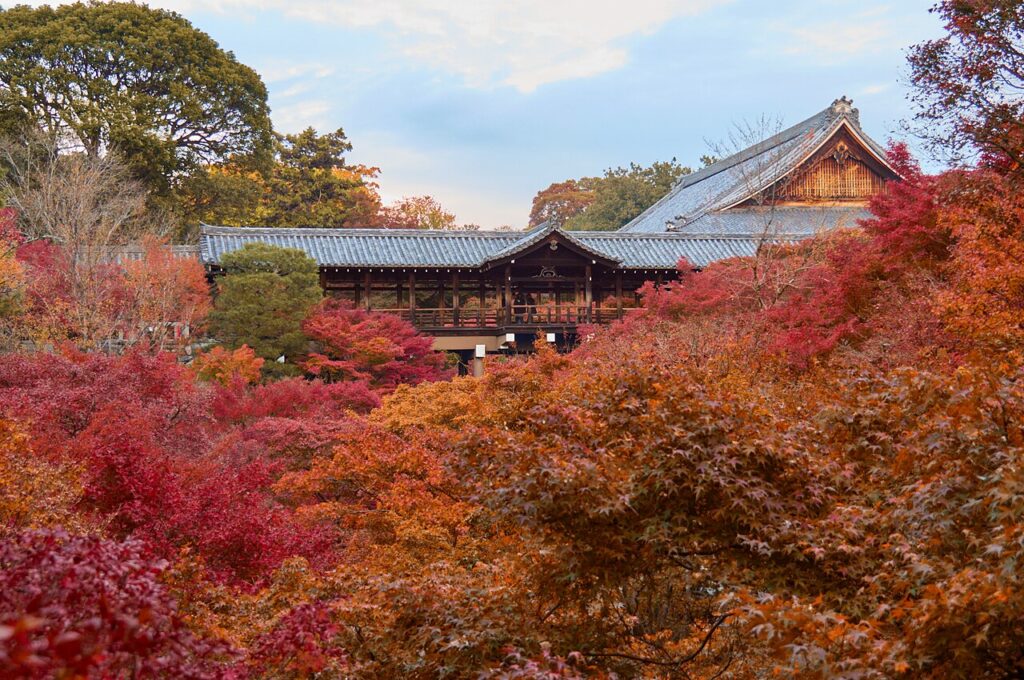
The red and gold colors of autumn usually reach their peak from mid to late November in the city center, though they can come earlier in the hills and later in the lowlands. The timing changes from year to year with the weather, so it helps to check recent reports from Kyoto close to your dates. A visit just before or just after the very best week can be calmer and still lovely.
Choosing a few places
Instead of a long list, choose one or two places for each day. Here are some ideas, each with a different feel.
- Tofuku-ji, a large Zen temple known for its autumn leaves and a covered bridge over a valley of maples. It is very popular, so go early.
- Higashiyama, the area of old lanes and temples on the eastern hills, which is good for a long walk with tea stops.
- Arashiyama, on the western side of the city, where a river, a bamboo grove and temples make a pleasant day out, ideally in the morning.
- Smaller gardens and temples in the northern and eastern parts of the city, where the leaves can be as beautiful and there are fewer people.
A gentle day
- Early morning Reach your first temple as it opens. The light is soft, the air is cool and the leaves look best before the crowds.
- Mid morning Walk on to a second place along quiet lanes, stopping when something catches your eye.
- Lunch Rest and eat slowly in a small restaurant. Kyoto is known for gentle, seasonal food.
- Afternoon Choose a garden with a teahouse. Sit down and look at the leaves for a while.
- Late afternoon Walk back through old streets as the lights begin to glow.
Moving around the city
Kyoto has buses, trains and subways, but in autumn the buses can be very crowded. Many visitors find that trains, subways, walking and sometimes cycling are quicker and more comfortable. Check the routes before you go, and give yourself extra time. A walk of twenty or thirty minutes between two places can be the best part of the day.
What to wear and bring
Autumn days in Kyoto can be mild and sunny, but mornings and evenings are cool. Layers are useful. Bring comfortable shoes that are easy to slip off, because you will remove them at many temples. Carry a small bag for your shoes, a light umbrella and a reusable bottle.
Manners at temples and in old streets
- Speak quietly and keep to the paths.
- Follow the signs for photography, as some areas do not allow it.
- Do not step into gardens or on moss for a photograph.
- In old residential streets, keep your voice low and respect private homes.
- Do not eat while walking in narrow lanes where signs ask you not to.
Weather to know about
Rain is common in Japan in some seasons. The rainy season in Kyoto usually lasts from about mid-June to late July, and typhoons are most likely from late August to September. By November the weather is usually dry and calm, though showers can still happen. A rainy autumn day can be beautiful too, with wet leaves shining and fewer people.
Staying in the city
Kyoto hotels and guesthouses fill up early in the autumn, so book well in advance if you can. Staying near a train or subway station makes it easy to start early. If the center is too expensive or busy, consider a quieter area and travel in.
Tea, sweets and slow stops
Kyoto is famous for tea and sweets, and autumn is a lovely season for both. Many temples and gardens have small teahouses where you can sit and look at the leaves while drinking green tea and eating a seasonal sweet. These breaks are not a waste of time. They are the heart of the visit, because they give your eyes a rest and let you notice what you have seen.
Evening illuminations
In some years, a number of temples open in the evening during the leaf season with the trees lit by lamps. The effect can be lovely, but crowds are often large, and you may need to book or queue. Check current information close to your visit, and decide whether you would rather have a quiet dinner and an early night.
Looking after your energy
Autumn sightseeing involves a surprising amount of walking and standing in queues. Wear supportive shoes, take regular breaks, and drink water. If you are traveling with older relatives, plan fewer places and use taxis between them. A slow day in Kyoto is a rich day.
Early mornings and quiet corners
The best way to enjoy autumn in Kyoto is to begin early. Many temples and gardens open in the morning, and the first hour often has soft light and fewer visitors. Choose a smaller place away from the best-known viewpoints, and walk slowly along side streets where maples overhang old walls. If a famous spot looks crowded, simply move on. Kyoto has many quiet corners, and a single red tree seen in peace is worth more than a crowded vista.
Walking, buses and trains
Kyoto is easy to walk in neighborhoods, but the sights are spread out. Buses and trains can be crowded in the autumn weekends, so allow extra time and avoid rush hours when you can. Plan each day in one area rather than crossing the city repeatedly. Wear comfortable shoes, carry a small bag and bring a light layer for cool mornings. Check current timetables and any seasonal changes locally before you travel.
Staying warm and comfortable
Autumn days can be crisp and sunny, but evenings are cold. Dress in layers and bring a scarf, a light jacket and shoes that are easy to remove at temples. A thermos or a hot drink from a small shop is a small comfort. If it rains, a quiet temple under an umbrella can be especially beautiful, and the wet leaves glow with color.
Eating well in autumn
Seasonal food in Kyoto often includes chestnuts, sweet potatoes, mushrooms and warm noodle dishes. Many small shops serve simple lunches, and tea houses offer sweets that match the season. Eat slowly, order modestly and let the afternoon rest. If you have dietary needs, ask kindly and show a written note, since some broths and sauces contain fish.
A gentle two-day plan
On the first day, choose one area, such as a hillside of temples, and visit two or three places in the morning. Rest at midday, then walk a quiet lane in the afternoon. On the second day, choose a different district, perhaps a garden or a riverside walk, and finish with an early dinner. Leave one hour each day for nothing at all. If you would like to continue to another old capital, our guides to Nara and Takayama describe gentle days nearby and further afield.
A last word on autumn in Kyoto
Autumn in Kyoto lasts only a few weeks, and its beauty is tied to its brevity. Let a few good hours satisfy you, and do not measure the trip by how many places you saw. A cup of tea beside a red maple, with no one rushing you, may be the memory that stays longest. Take a breath, look slowly and let the season be enough.
Find it on the map
- Check current autumn leaf reports close to your date, and expect large crowds in the best weeks.
- Book accommodation early, and arrive at major temples soon after opening.
- Carry a bag for your shoes, since you will remove them at many temples.
- Plan trains, subways and walking instead of relying only on crowded buses.
- Check the weather and any local news the day before, and read recent Google Maps reviews for current conditions.
- Carry water, sun protection and small change, and wear comfortable shoes.
- Dress modestly for temples and shrines: shoulders and knees covered.
Take your time. Do not hurry from one stop to the next. Sit down, look slowly, and let yourself appreciate what is in front of you. A place seen slowly is remembered for much longer.
Edited by Rehel Jemera Sausa