
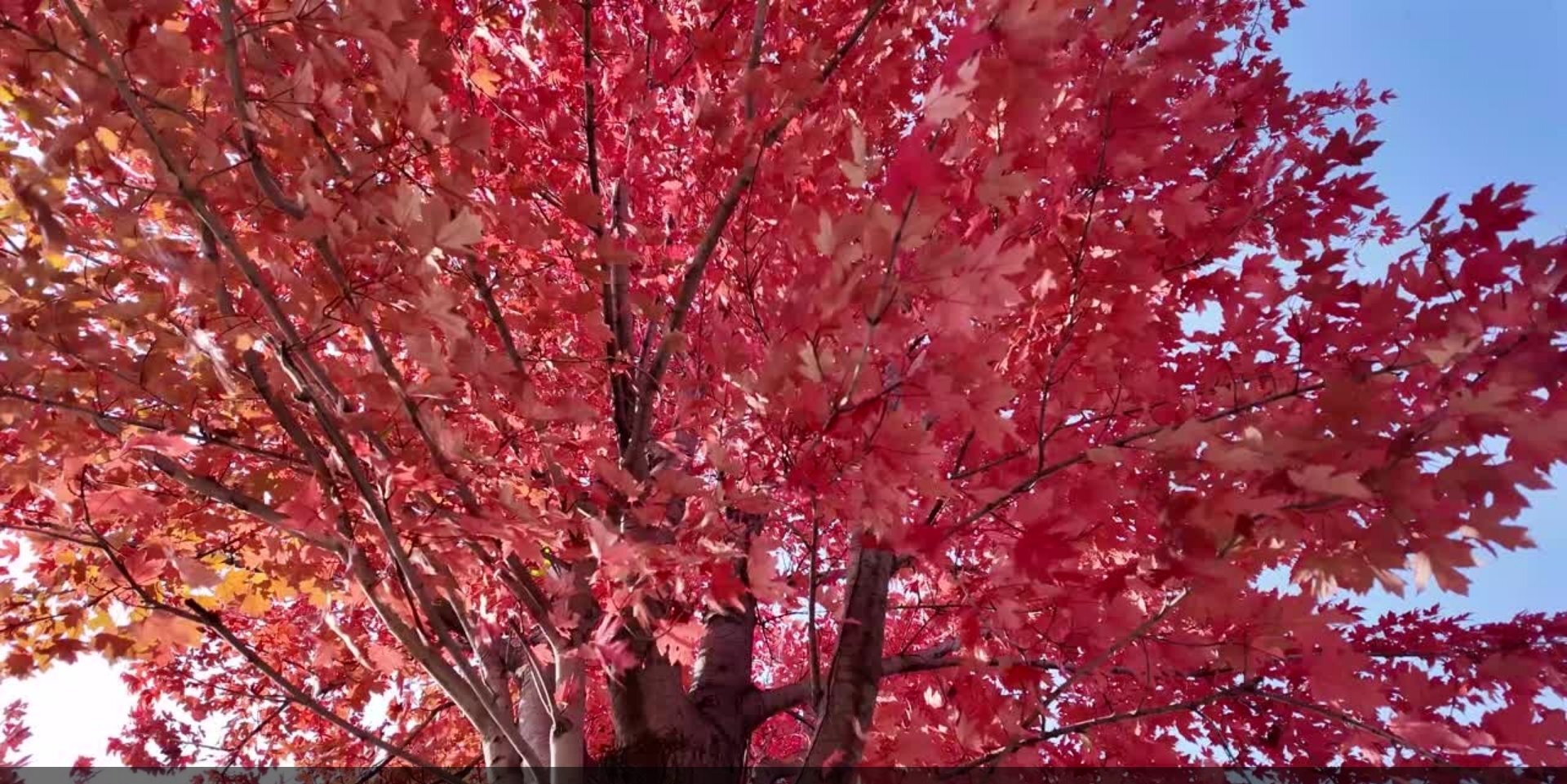
Letting Go & Unburdening — Trees Shedding Leaves + Balloons
A tree doesn't mourn each leaf individually on its way down. It simply lets go of what it no longer needs to carry through the winter — and a hand holding a balloon has to open, eventually, if it wants to know what the balloon does when it's free.
There's a difference, worth naming clearly, between the letting go that a tree does and the letting go a hand does with a balloon. A tree releases what has already stopped serving it — the leaves have finished their summer's work of gathering light, and holding onto them through winter would cost more than it's worth. That's release as maintenance: an ongoing, unsentimental practice of not carrying what's already done its job.
The balloon is a different kind of release — not something worn out, but something you're actively choosing to set free before you're fully sure you're ready. A commitment that no longer fits who you've become. A version of a plan you're finally willing to let rise up and away instead of gripping tighter. The hand doesn't know exactly what will happen once it opens. It only knows that holding on has started to cost more than the holding is worth.
I knew a man in his fifties who'd spent nearly two decades keeping a workshop full of tools from a trade he'd left years earlier — not because he used them, but because letting them go felt like admitting that chapter of his life was actually over. It took him most of a year to finally give the workshop away, tool by tool, to people who'd use them. He told me afterward that the strange part wasn't the loss. It was how much lighter the rest of the house felt once that one room stopped being a shrine to a door he'd already walked through.
Both kinds of release ask the same question in the end: are you carrying this because it's still doing something for you, or because letting go feels harder than carrying it? The leaves don't wrestle with that question. The hand around the balloon string usually does. But the outcome, eventually, is the same either way — lighter, and ready for whatever the next season is bringing.
Retirement offers one of the clearest tests of this distinction I've come across. I know a woman who retired after thirty-one years as a school principal and found, to her genuine surprise, that the hardest part wasn't missing the actual work — it was not knowing who she was without the title attached to her name at every gathering, every introduction, every quiet moment of self-description. The role had been a leaf for years, doing real and valuable work. But somewhere along the way it had also become a balloon string she was gripping without quite noticing, mistaking the title for the substance underneath it. Letting go of "principal" as her primary answer to "who are you" took longer than letting go of the actual job had.
This is worth sitting with honestly: some releases cost far more than others, and it does nobody any good to pretend a hard release is actually easy just because, in principle, you know it's the right one. The leaves the tree drops in October don't cost the tree much; it's done that every year of its life. But some releases are closer to a tree letting go of an entire limb — necessary, sometimes, for the health of the whole, but genuinely painful in a way that deserves acknowledgment rather than a quick, tidy metaphor moving past it too fast.
It's worth naming, too, a particular trap of this chapter: mistaking every difficult feeling for a signal that something needs releasing. Not every discomfort is a balloon asking to be let go. Some of it is simply the ordinary friction of doing something worthwhile, which isn't the same thing at all. Learning to tell the difference — is this tension the kind that needs releasing, or the kind that means the work is actually working — is its own quiet skill, worth building alongside the release itself.
If you're standing at the edge of a release you know is right but haven't made yet, it may help to set an actual date — not vague someday, an actual day on the calendar — by which you'll have taken the first concrete step. Balloons held too long tend to get held indefinitely without a deadline attached. The hand doesn't have to open all at once. It just has to open by a date you've actually chosen.
Letting go, in either of this chapter's forms, is never really about the object released. It's about what becomes possible once your hands are free enough to hold whatever comes next.
Try This Today
Two different kinds of letting go, and how to tell which one you need.
- Sort the leaves from the balloons. Name one thing you're carrying that's already finished its work (a leaf) and one thing you're gripping out of fear rather than usefulness (a balloon).
- Let one leaf fall without ceremony. Release one small, obviously-finished thing today — practice the unsentimental kind of letting go.
- Open your hand around one balloon. Choose one thing you've been holding onto out of fear, and take one concrete step toward releasing it — even if you're not fully certain yet.
Discussion Questions
- What is one leaf in your life — something already finished that you can release without ceremony?
- What is one balloon — something you are gripping out of fear rather than usefulness?
- What has stopped you, so far, from opening your hand around that balloon?
Your Reflection
A Closing Thought:
Some things you release because they're finished. Others you release because you're finally ready to find out what happens when you open your hand.
This is a chapter from Brighter Mornings: Finding Joy in Everyday Sunrise by Rehel Jemera Sausa (Part Four: Rays of Liberation, Chapter 12). The full book is coming soon to Amazon.

Brighter Mornings
Finding Joy in Everyday Sunrise
Twenty-four short chapters in eight parts about meeting each day facing the light, like the sunflowers of Lopburi where the book began.
Coming soon to Amazon