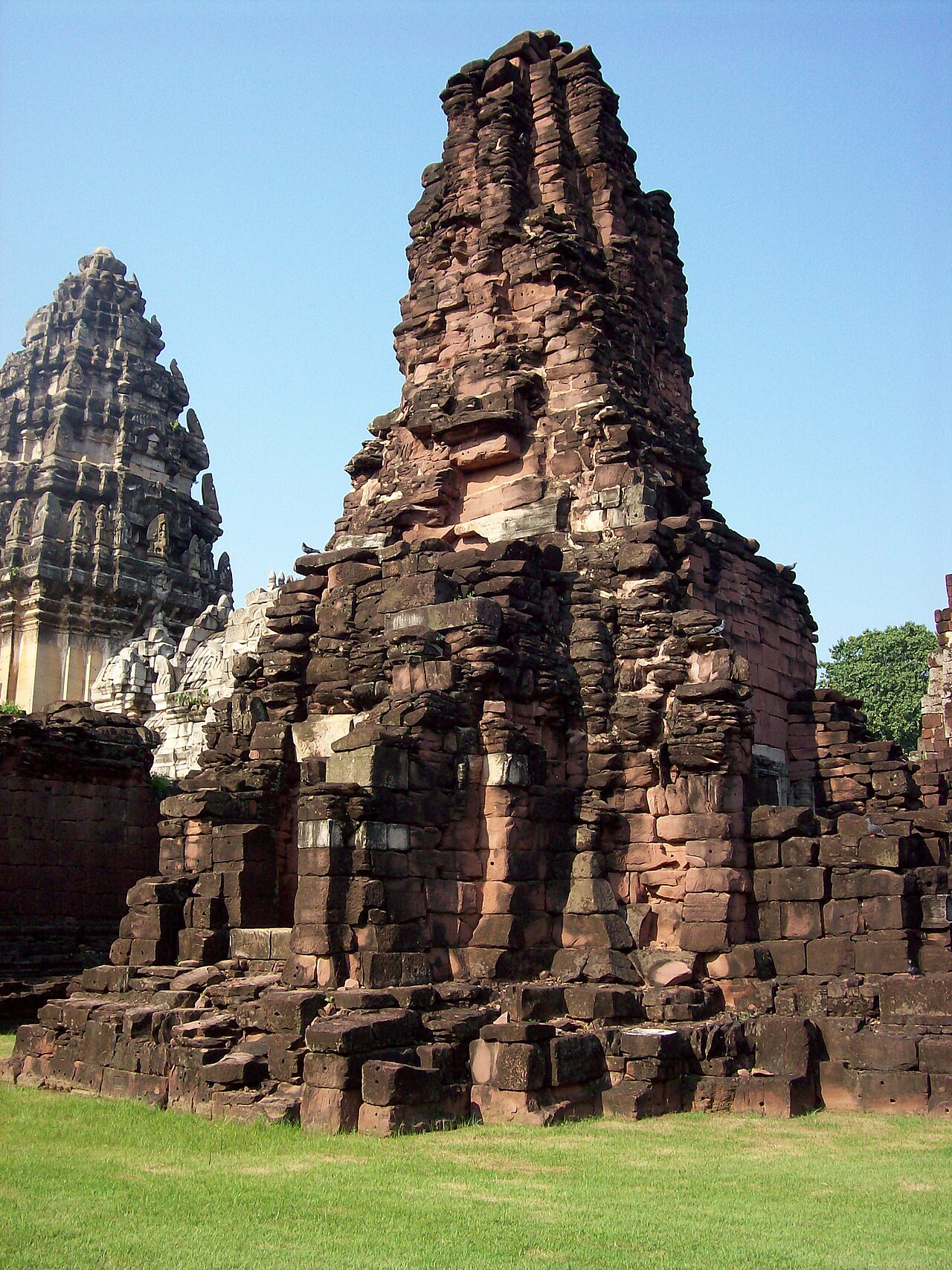
Phimai is a Khmer temple sanctuary in northeast Thailand, built about nine hundred years ago and still standing in the middle of a small, friendly town. It is less famous than Angkor in Cambodia, and that is exactly why many visitors love it: you can walk its courtyards slowly, without a crowd, and then eat dinner at a night market just outside the gate.
Why Phimai matters
Phimai dates from about the eleventh and twelfth centuries, when the Khmer Empire ruled much of mainland Southeast Asia. It was connected to the Khmer capital at Angkor by an ancient road, and it is considered one of the most important Khmer sites in what is now Thailand. The main sanctuary was built as a Buddhist temple, which makes it somewhat different from many Hindu temples of the period.
The site has been restored and is now protected as a historical park. The restoration work means that many of the structures look clear and complete, which helps visitors understand the original plan.

Getting there
Phimai is usually reached from Nakhon Ratchasima, often called Korat, which is about an hour away by bus or by car. Korat is itself a transport hub, with trains and buses from Bangkok. Many travelers combine Phimai with a night in Korat, while others stay in Phimai itself for a calmer atmosphere.
Check the transport options on a reliable source close to your travel date, as timetables can change. If you are traveling by car, the roads are generally straightforward.
Walking the sanctuary
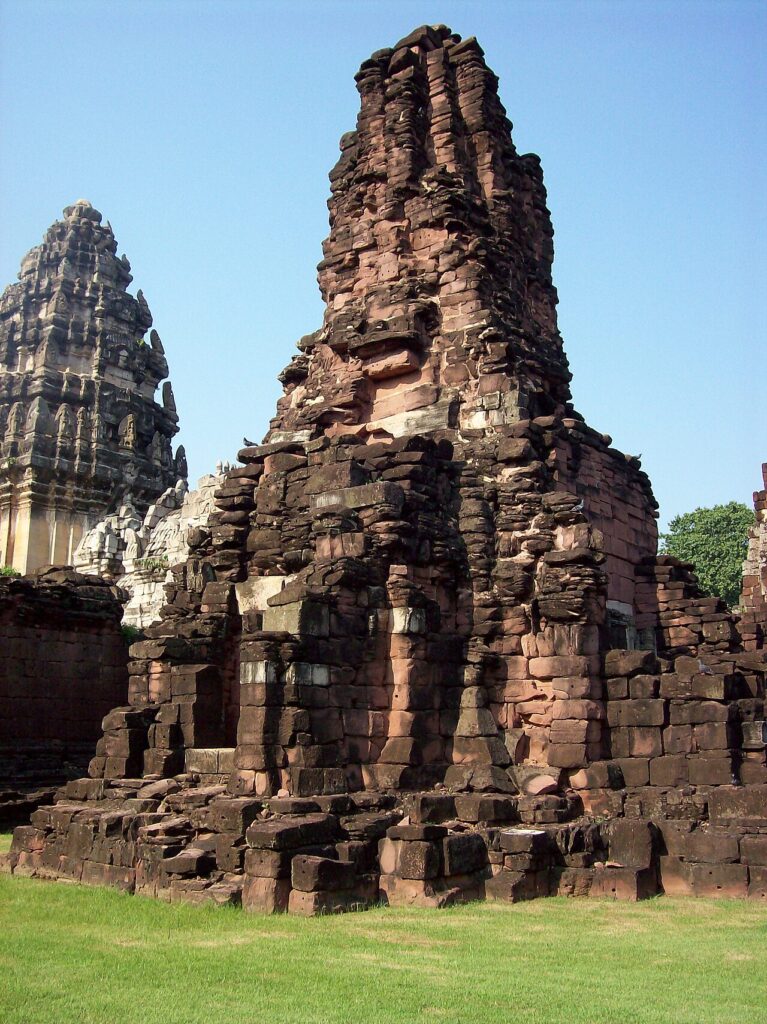
The sanctuary lies inside a rectangular wall with gateways on each side. As you walk toward the center you pass through a stone causeway and a gate, and the main tower stands ahead of you in a courtyard. The proportions are calm and balanced, and the pale stone looks lovely in the early morning or late afternoon.
Do not rush to the central tower. Walk around the outside and look at the carving on the lintels, the doorways and the smaller buildings. You will see figures, flowers and scenes carved in stone, many of which are still clear after centuries.
- Arrive Come in the morning or late in the day, when the stone is cooler and the light is softer.
- Walk the outer area Take a few minutes at the gateway and the causeway before entering the inner courtyard.
- Look closely Study the carvings above the doorways and the stonework on the main tower.
- Sit Find a shaded spot, rest, and simply look. This is part of the visit.
Respect for a sacred place
Though it is an old monument, Phimai remains a place of religious significance for many local people. Dress modestly, speak softly and avoid climbing on the stones. Follow any signs or staff directions about areas that are closed to protect the structures.
How long to stay
Most visitors spend one to two hours here. If you love history or photography, you may want longer. In the middle of the day the sun is very strong and there is little shade in the open courtyards, so plan to come early or late, bring water and wear a hat.
Beyond the sanctuary
Phimai is a small town, and the pleasure of it is the pace. Near the park there is a museum with items from the area, which helps place the temple in its wider history. There are also old city gates, a quiet riverside and, nearby, a huge old banyan tree on an island in a reservoir that locals like to visit.
In the evening there is a market close to the historical park with simple food stalls. It is a lovely way to end the day. Try a local dish, sit with the families who come for their dinner, and enjoy the cooler air.
Combining Phimai with other places
If you have extra days, you can combine Phimai with other Khmer sites in the northeast. A guide or a good book will help you build a route. Keep the pace gentle and plan only one main site a day, because the roads can be long and the weather hot.
The Khmer road to Angkor
One of the most interesting things about Phimai is the idea of the road. In the time of the Khmer Empire, a route is said to have linked Angkor, the great capital in what is now Cambodia, with Phimai across the plateau. Whether you think of it as a highway or a series of paths, it shows how connected the region once was. A traveler who stands in the Phimai courtyard is standing at the end of a very long journey that people made on foot, by cart and on elephants.
This makes the place feel less like a remote ruin and more like a living point on a map. It is worth pausing for a moment to imagine the travelers, the monks and the builders who came here.
The museum and the old town
Close to the historical park, a small museum displays carved stones, pottery and other objects found in the area. It is an ideal first stop if you want some background, or a second stop if you want to understand what you saw. The labels give the context, and the quiet rooms are restful on a hot day.
The town around the park has old gates, small shops and temples. You do not need to hurry from one to another. Walk slowly, rest in a cafe, and notice how people go about their day. This is also the kind of place where a short conversation, even with only a few words, can be a pleasure.
A simple one-day plan
Arrive in the morning, visit the museum first, and walk to the sanctuary when the light is soft. Have lunch in town, rest in the heat of the afternoon, and return to the sanctuary late in the day for the golden light. End at the evening market. This plan includes long rests, and that is intentional. The trip works best when the pace is gentle.
A note on the weather
The northeast is hot for much of the year, and the sun at midday can be intense. The cool season is the most comfortable, though the mornings can still feel warm. In the rainy months the site is green and quiet, although there may be short heavy showers. A small umbrella and a hat are useful at any time.
What to wear and bring
Wear light, modest clothes with shoulders and knees covered, and shoes that are comfortable on stone and uneven ground. Bring a hat, sun protection, water and a small towel, since the sanctuary is open and can be hot. A light layer helps in the cool season mornings. Check current opening hours and entry arrangements locally before you go, since they may change.
Traveling with children or older relatives
The sanctuary is mostly flat, with wide courtyards, but the stone can be hot and the shade is limited. Visit in the early morning or late afternoon, take frequent rests and keep the plan short. Children may enjoy the carved lintels and the large doorways, while older relatives may prefer to sit under a tree and let others explore. A calm pace helps everyone.
Looking at Khmer stonework
The beauty of Phimai lies in details. Look for carved lintels above doorways, the layered roofs of the towers and the patterns of the stones. Walk around a tower slowly, noticing how the light changes on the surface. A short time of close looking is more rewarding than a long time of walking quickly. If you like, bring a notebook and draw one small detail.
Heat, rain and the cool season
Northeast Thailand is hot for much of the year, and the rainy season brings sudden showers. The cool season is usually the most comfortable time, with softer light and clearer skies. In the rainy months, keep a small umbrella and a flexible plan, since wet stone can be slippery. The ruins look soft and green after rain, and the crowds are often smaller.
Continuing to other Khmer places
If you enjoy Khmer architecture, our guide to three heritage stops in Lopburi describes towers and old courts in another part of central Thailand. Visiting two or three places over several days lets you notice the similarities and differences in style. Do not try to see too many. One careful visit is better than five hurried ones.
Find it on the map
- Check transport from Korat close to your date, because timetables can change.
- The open courtyards have little shade, so bring water and a hat, and visit early or late.
- Follow staff directions and signs, and do not climb on the old stones.
- Check opening hours before you go and carry small change for the market.
- Check the weather and any local news the day before, and read recent Google Maps reviews for current conditions.
- Carry water, sun protection and small change, and wear comfortable shoes.
- Dress modestly for temples and shrines: shoulders and knees covered.
Take your time. Do not hurry from one stop to the next. Sit down, look slowly, and let yourself appreciate what is in front of you. A place seen slowly is remembered for much longer.
Edited by Rehel Jemera Sausa