
Kampot is a small river town in southern Cambodia, where old French buildings line quiet streets, the water drifts past at sunset and the pace of life is slow. It is known across the world for its pepper, and for salt, fish sauce and durian too. This guide explains the town, its history and the places worth visiting, with tips for seeing it kindly.
A river town near the sea
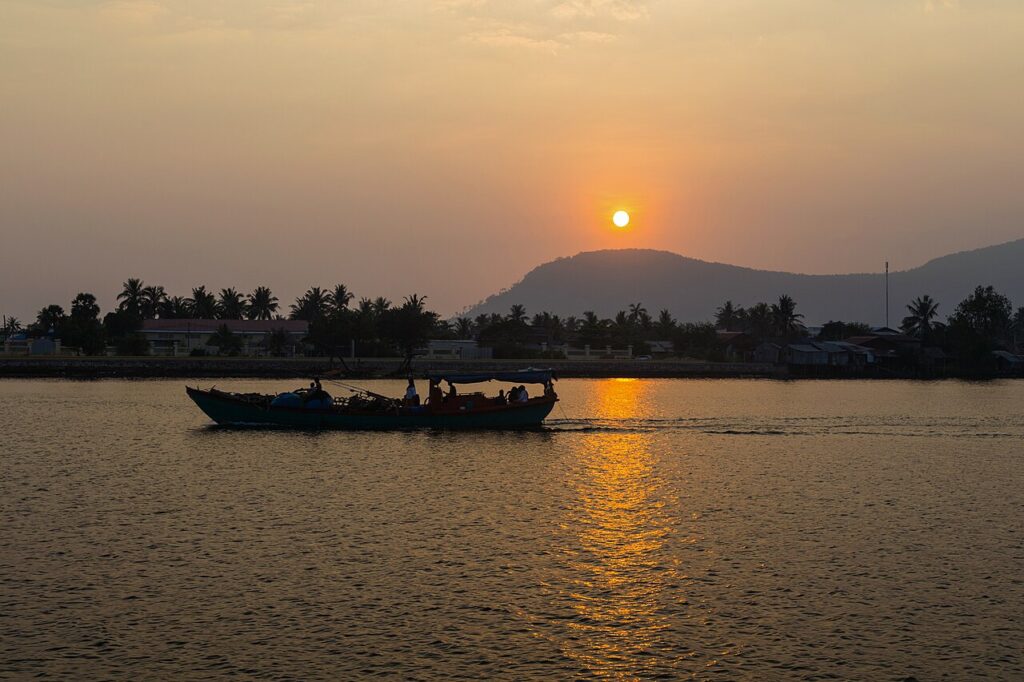
Kampot lies in southern Cambodia, south-east of the Elephant Mountains and only about five kilometers from the Gulf of Thailand. The Praek Tuek Chhu River runs through it, and the river is the center of the town's life. The population is about forty thousand, which makes Kampot small enough to feel like a village in the evening. Sunsets here are slow and gentle, and the hills in the distance catch the last light.

A short history
Under French rule, Kampot was the seat of a regional administration, and for a time it was Cambodia's main seaport, until Sihanoukville took over that role. In the 1880s, French troops put down a local uprising. In the twentieth century, the town and its people lived through the wars and the Khmer Rouge period, and Kampot was captured in a hard battle in 1974 that left many civilians homeless. Many residents remember those years, and visitors should approach the subject with respect.
The old town
Unlike many provincial capitals in Cambodia, the center of Kampot is made up of nineteenth-century French colonial buildings. Walk slowly through the streets near the market and the river, and look at the shuttered windows, the yellow plaster and the small shops. Some buildings have been restored as cafes and guesthouses, while others are in need of repair. The old town has been prepared for a UNESCO World Heritage nomination, and some residents worry that new development may damage it. Be gentle with the streets, and choose businesses that care for the old buildings.
Evenings by the river
The riverfront is where the day ends. Local families stroll along the bank, and visitors sit at cafes and watch the light fade over the water. Small boats take passengers on short sunset trips, and the river is calm and wide. Ask your guesthouse about trusted operators, check that life jackets are available, and avoid trips that run in bad weather. A quiet hour at the water is the heart of a stay in Kampot.
Pepper, the town's pride
Kampot pepper has an excellent reputation, and the name is protected as a regional product. Farms in the countryside grow the vines on wooden posts, and many welcome visitors for tours and tastings. You can see how the peppercorns are grown, dried and sorted, and you can buy small packets as souvenirs. Ask about the season, since harvests happen at certain times of the year, and choose a farm that is open about its methods. A little pepper is a thoughtful gift.
Salt fields and the coast
The area around Kampot is also known for sea salt, which is harvested in shallow fields near the coast, as well as for fish sauce and durian. Salt harvesting is hard seasonal work done in the dry months, and visitors should look from a distance and avoid walking on the pans. Durian lovers will find the fruit in season at local markets, and those who are not sure can ask for a small taste first before committing to a whole one.
Bokor Hill
Many visitors take a day trip to Bokor Hill in the Elephant Mountains, where old abandoned buildings from the colonial era stand among cool, misty forest. Conditions and facilities on the hill change over time, so check current information before you go, and take a jacket since it can be much cooler than the town. Travel with a reliable driver, avoid walking into unmarked buildings and keep to paths that are open to visitors.
Kep and the sea
The seaside town of Kep is a short drive from Kampot and is known for its seafood and quiet coast. Many people go for lunch, a walk by the water and a look at the old villas and the crab market. Weekdays are calmer than weekends. If you eat seafood, ask about prices and portions first, and choose busy places where the food turns over quickly.
Seasons and weather
Kampot is hot all year, with average daily highs of around thirty-two degrees Celsius. May is the hottest month, August is the wettest and February is the driest. The best time to visit is usually the drier months from about November to April, when the evenings are comfortable and roads are in better shape. In the rainy season, expect heavy showers and a green countryside, and carry a rain jacket. Drink plenty of water at any time of year.
Getting there and around
Buses and minibuses connect Kampot to Phnom Penh, Sihanoukville and other towns, and the journey from the capital takes a few hours. Check schedules and book through a reliable agent. Within the town, you can walk or cycle, and tuk-tuks and motorbike taxis are easy to find. Agree on the price before you set off, and use a helmet if you ride a motorbike. Roads outside the center can be rough.
What to eat
Look for fresh seafood, Khmer curries, noodle soups and dishes made with the local pepper. Markets sell fruit, sweets and street snacks, and small restaurants along the river offer a calm place to eat. If you try a new dish, ask what is in it, and be patient if the menu is limited. Eating where local families eat is usually a good sign. Carry a refillable water bottle and avoid ice if you are unsure of its source.
Where to stay
Guesthouses and small hotels line the river and the old town, with simple rooms and a few boutique options. Some sit in the countryside, among fields and orchards. Book ahead for the holiday periods, and ask your host about noise, since some riverside bars are lively at night. A room with a small balcony facing the water is a good choice if you enjoy slow mornings.
A slow day in Kampot
- Morning: walk through the old town and have breakfast at a local cafe.
- Late morning: visit a pepper farm and taste the different types.
- Midday: rest in the shade or take a short nap.
- Afternoon: cycle to the countryside or the salt fields.
- Evening: watch the sunset on the river and eat a simple dinner.
Visiting with respect
Kampot is a home, not just a destination. Dress modestly when you visit temples or the market, ask before photographing people, and be considerate if people share stories about the past. Buy from local sellers, avoid giving money to children and support businesses that treat their staff well. A polite greeting in Khmer is always appreciated.
Cycling the quiet roads
The countryside around Kampot is flat and green, with rice fields, palm trees, small villages and views of the hills in the distance. Many guesthouses rent bicycles, and a morning ride on the back roads is one of the nicest ways to spend a day. Start early, carry water, wear a hat and use a map or phone for navigation. Stop often to look and to greet people. Be careful on busy roads, where trucks and motorbikes travel fast, and avoid cycling after dark.
Staying comfortable in the heat
Southern Cambodia is hot and humid for much of the year, so plan your day around the weather. Do your walking and cycling in the early morning and late afternoon, and spend the middle of the day resting in the shade or in a cool cafe. Drink water regularly, wear light clothes and carry sun protection. If you feel dizzy or unwell, stop, rest and drink. A relaxed rhythm is not just pleasant in Kampot, it is also the sensible way to travel.
Photographing the town with care
The old buildings, the river at dusk and the market make wonderful subjects. Ask before taking pictures of people, especially children, monks and vendors, and accept a no with a smile. Do not block narrow streets for a picture, and avoid using a drone near people or homes. Some of the best photographs are the quiet ones, such as a bicycle by a shuttered door, or a boat at rest on the water.
Money, language and small courtesies
Prices in Cambodia are often quoted in US dollars as well as in riel, and small change is useful at markets and for tips. Learning a few Khmer words, such as hello and thank you, is always appreciated. Greet people with a slight bow and your hands together if you are comfortable doing so, and speak gently. Do not touch people on the head, and remember to remove your shoes when entering homes and temples.
Find it on the map
- Check conditions and facilities before you travel to Bokor Hill.
- Dress modestly for temples and markets.
- Drink plenty of water and use sun protection.
- Agree on prices before you start a trip or a ride.
- Check the weather and any local news the day before, and read recent Google Maps reviews for current conditions.
- Carry water, sun protection and small change, and wear comfortable shoes.
- Dress modestly for temples and shrines: shoulders and knees covered.
Take your time. Do not hurry from one stop to the next. Sit down, look slowly, and let yourself appreciate what is in front of you. A place seen slowly is remembered for much longer.
Sources
Edited by Rehel Jemera Sausa