
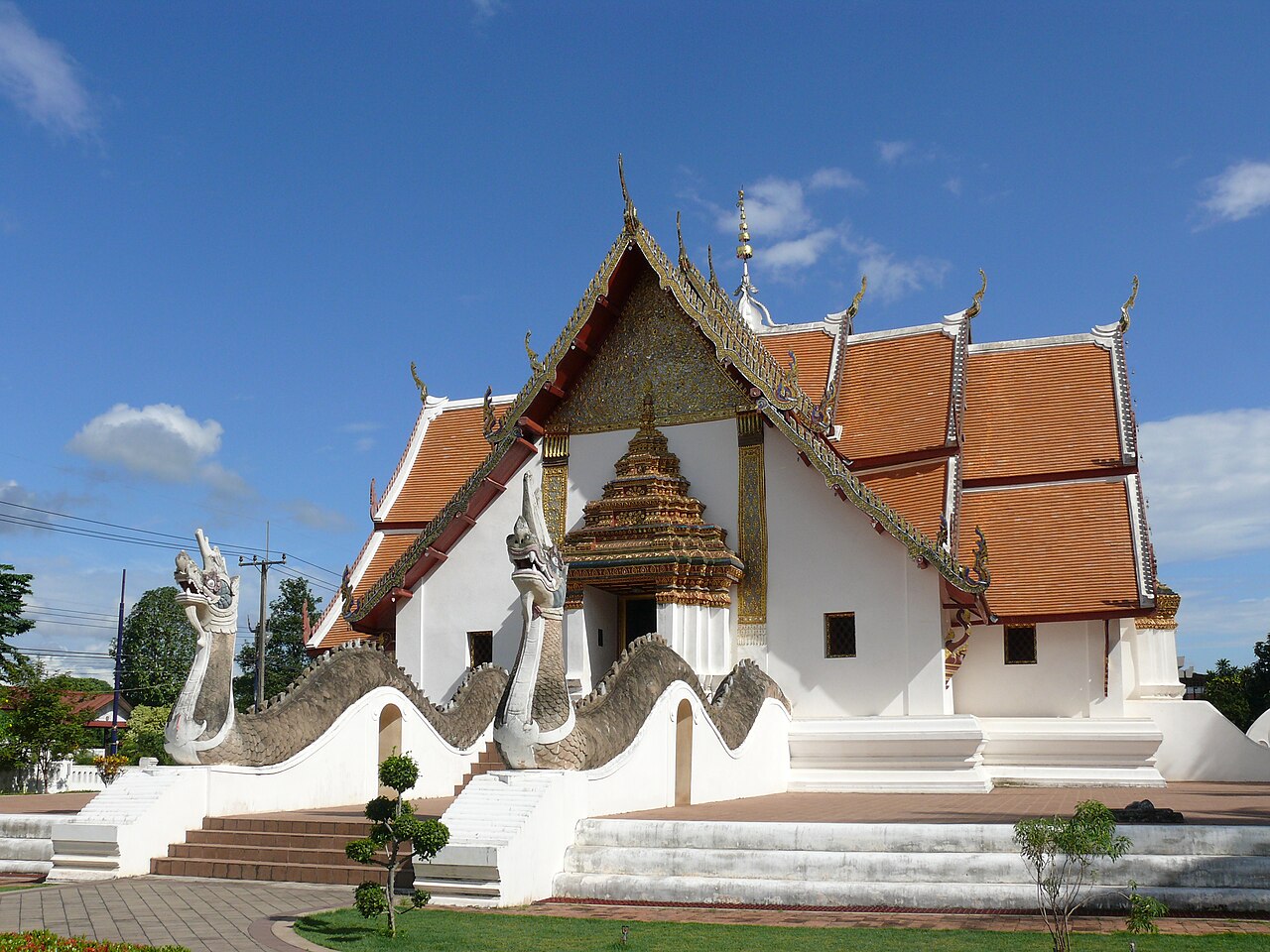
Nan is one of the quieter corners of northern Thailand. It sits in a river valley, ringed by forested mountains, and it has kept a calm, unhurried feel. The town is best known for Wat Phumin and its murals, but the real pleasure of Nan is the pace. It is a place to slow down, look closely and take your time.

Where Nan is
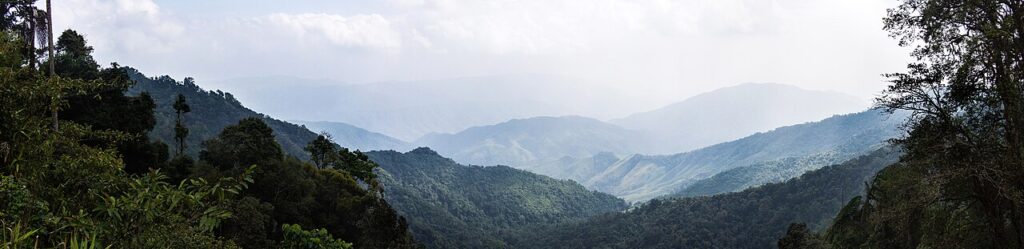
According to Wikipedia, Nan is a province in upper northern Thailand with Nan town as its capital. It borders Uttaradit, Phrae and Phayao to the south and west, and Laos to the north and east. The province lies in the remote Nan River valley, surrounded by forested mountains. About 61 percent of the province is forest, and seven national parks are found here.
That remoteness has shaped its character. For centuries Nan was relatively isolated, and a Kao people kingdom ruled here. The first kingdom emerged around the late thirteenth century at Mueang Pua, and the capital moved to its present site in the fourteenth century. You can feel that long, separate story in the town today.
Wat Phumin
Wat Phumin is the best-known temple in Nan, and Wikipedia describes it as famous for its murals and its ubosot with four facades. Reviewers on Google Maps often write about its cross-shaped design, which is unlike many other northern temples, and about the detailed paintings inside that show scenes of Lanna life and stories. One painting of two figures leaning close together is especially famous.
Many visitors describe it as calm and beautiful. Several on Tripadvisor note that the temple is fairly small and can be seen in a short time, though still well worth the stop. A few say they almost missed the murals because they did not go inside, so make sure you step into the main hall. The sculpture of a couple outside is a popular photo spot, so expect a small crowd there.
As with any temple, dress modestly, take off your shoes at the door, and ask before taking photographs inside.
The walking street and evening market
Visitors often suggest planning your visit for late afternoon, because a walking street and small markets appear beside the temple on weekend evenings. Reviews describe a Saturday evening market next to the temple and another on Sunday evening, with local food, crafts and a relaxed atmosphere. If you can, plan to be in Nan over a weekend, and let yourself wander slowly with a snack in hand.
Other sights in town
- Wat Phra That Chae Haeng, the most sacred temple in the province, on a hill southeast of town with views over the valley
- The Nan National Museum, with English labels; check opening days, since it is closed on some days
- Wat Phra That Chang Kham, a fourteenth-century stupa with a large Buddha image
- Wat Phra That Khao Noi, known for views and an early Sukhothai-style Buddha
- Wat Suan Tan, another quiet temple with views
Wikivoyage also mentions several historic houses and galleries that can be visited by arrangement. If you wish to see a private house, call ahead and ask politely. Many are family homes, not public attractions.
The countryside
Nan's real treasure is the countryside around the town. Forested mountains, small villages and quiet roads make it a place for slow drives and gentle walks. Wikipedia notes that Phu Khe, at 2,079 meters, is the highest peak in the province, in Bo Kluea District. Sirikit Dam and Si Nan National Park are among the natural places that visitors enjoy.
Wikivoyage suggests that side roads are often safer and more scenic than highways, and that traffic is light outside town. It also recommends the Bo Kluea loop for a scenic trip of two or three days, usually by motorbike. If you are not experienced on a motorbike, hire a driver instead. Mountain roads are no place to learn.
Seasons and festivals
Nan has a tropical savanna climate. Wikipedia says April is the hottest month, and the monsoon season runs from late April to October. The cool season, from about November to February, is the most comfortable time for walking. Wikivoyage notes festival times: long-boat races on the Nan River in September and October, a sky-rocket merit fair at Wat Phra That Chae Haeng around February or March, and the Songkran water-blessing festival in mid-April.
December is the season of local golden oranges, a small and tasty reason to visit.
Getting there and around
Nan has a small airport about one and a half kilometers from town, with flights from Bangkok. The main bus station is at the south edge of town, and buses connect Chiang Mai, Phrae and Phitsanulok. The nearest train station is Den Chai, in Phrae Province, about 145 kilometers away, followed by a road transfer.
Once in Nan, a motorbike is popular for exploring, and songthaews, which are shared pickup taxis, serve out-of-town sights. Cars are fine, too, since the roads in town are wide and well kept. Wikivoyage notes that tourist infrastructure is limited, so it helps to plan ahead and to book rooms and transport early in busy periods.
How to plan a slow visit
- Spend at least two nights. Nan rewards a slow pace, and one night feels rushed.
- See Wat Phumin early. The light is soft, and the temple is calmer.
- Visit one hilltop temple. Wat Phra That Chae Haeng gives a wide view and a feeling for the valley.
- Take one scenic drive. Choose a side road and stop whenever a view invites you.
- Leave one afternoon empty. Sit in a cafe, walk a quiet street and do nothing in particular.
Respect and local manners
Nan is a place where people live quietly, and visitors are most welcome when they are courteous. Dress modestly at temples, ask before photographing people, and be patient in shops and restaurants. Wikivoyage mentions that many sites close on specific weekdays, so check opening days before you set out, and that private homes should be visited by arrangement.
With children and older family
The town is flat, calm and easy to walk. Children often enjoy the colors at Wat Phumin and the long, quiet roads. Older travelers will like the mild pace, but should plan rests and avoid very hot afternoons. If you plan a scenic drive, take along water, snacks and a spare layer for the hills.
Questions travelers ask
Is Nan safe? Wikivoyage describes it as considered very safe, though tourist services are limited, so plan ahead. Is it expensive? Rooms and rentals can cost more than in some better-known northern towns, so compare options. Is it good for photography? Yes, especially in soft morning light, but take care on mountain roads.
Take your time
Nan is not a place to rush through. It is a place to sit, to look at an old painting for a long time, and to watch light move across a river valley. The best days here are the ones you do not fill.
When you leave, take a quiet moment to thank the town, in whatever way is natural for you. A kind visit is the best gift a traveler can leave.
What to wear and bring
Nan is cool in the early mornings of the cool season and warm by midday, so dress in light layers. Wear comfortable shoes for walking and for removing at temples, and bring a hat, water and a light rain jacket. Dress modestly for temples, with shoulders and knees covered. A small notebook is a good companion for a town that invites quiet looking.
Heat, rain and the green season
The rainy months turn the hills green and bring sudden showers, while the hot months can be strong at midday. Plan walks for the cooler hours and rest in the middle of the day. A temple in soft rain can be especially lovely, but wet steps are slippery, so go slowly. Check the forecast and local conditions before long drives.
A slow two-day plan
On the first morning, visit Wat Phumin when the light is gentle, then walk the old town and rest at midday. In the evening, stroll the walking street and eat something simple. On the second day, take a slow drive into the hills or visit a village, returning by afternoon. If you would like coffee stops, our guide to cafes in Nan Old Town describes wooden houses and local beans.
On the road to Nan
The road to Nan is long and winding, and many travelers pass through Phrae on the way. Our notes on two stops in Phrae on the road to Nan describe a hilltop temple and strange earth pillars that make a good break. Leave early, avoid driving mountain roads after dark if you are not used to them and check conditions before you set out.
Find it on the map
- Check opening days for museums and temples, since many close on certain days.
- Book rooms and transport early in busy periods, as services are limited.
- Drive carefully on mountain roads, or hire a driver if you are not confident.
- Check the weather and any local news the day before, and read recent Google Maps reviews for current conditions.
- Carry water, sun protection and small change, and wear comfortable shoes.
- Dress modestly for temples and shrines: shoulders and knees covered.
Take your time. Do not hurry from one stop to the next. Sit down, look slowly, and let yourself appreciate what is in front of you. A place seen slowly is remembered for much longer.
Edited by Rehel Jemera Sausa


