
Jeju is a volcanic island south of the Korean mainland, with a great mountain at its center, hundreds of small craters on its slopes and black stone walls around its fields. It has long felt like a world of its own, and it is a favorite holiday island for people across South Korea. This guide explains the island and its main places, and how to enjoy them at an easy pace.
An island of fire and stone
Jeju lies in the Korea Strait, about 83 kilometers south of the peninsula. It covers around 1,800 square kilometers, and about 660,000 people live there, most of them in Jeju City and Seogwipo. The island was formed by volcanic eruptions some two million years ago, and the ground is mostly basalt and lava. It has around 360 small volcanic cones, called oreum, scattered over the slopes.
Hallasan, the mountain at the center
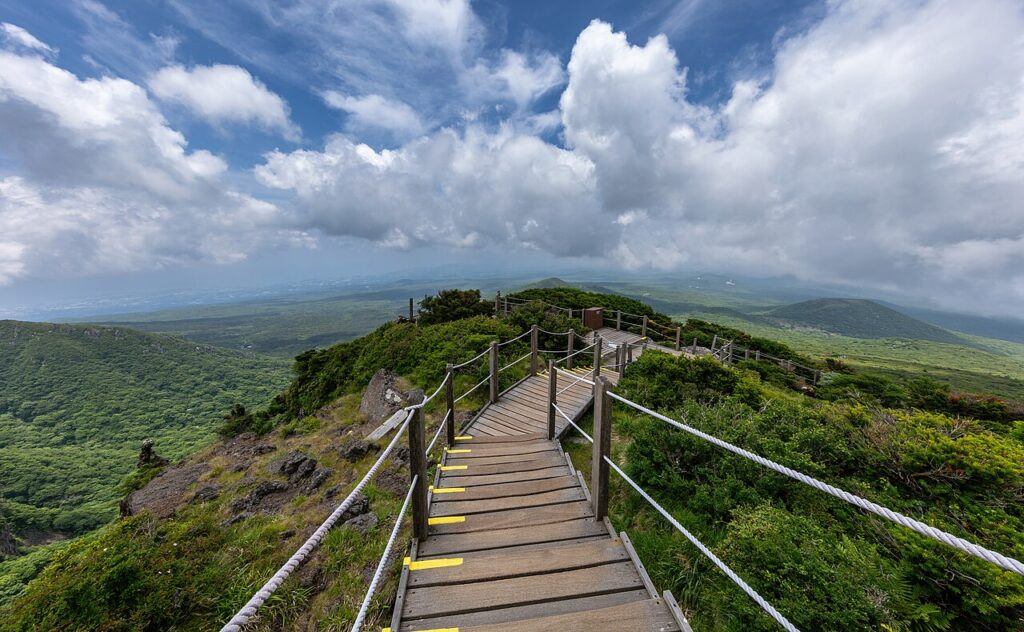
Hallasan rises to nearly 1,950 meters, and it is the highest mountain in South Korea. It dominates the island, and on clear days you can see it from almost anywhere. The mountain is a national park, and several trails lead up the slopes through forest, meadow and volcanic rock. The climb is long, so check the route, the opening times and the weather before you decide. Start early, carry plenty of water and be ready to turn back.
A World Heritage landscape
Jeju Volcanic Island and Lava Tubes was listed by UNESCO as a natural World Heritage site. It includes the summit of Hallasan, a famous crater and cone at the eastern end and a system of lava tubes. Together they show the forces that shaped the island. As you travel, notice how the dark stone appears in walls, houses, beaches and cliffs. The island is built from its own volcanic story.
Seongsan Ilchulbong
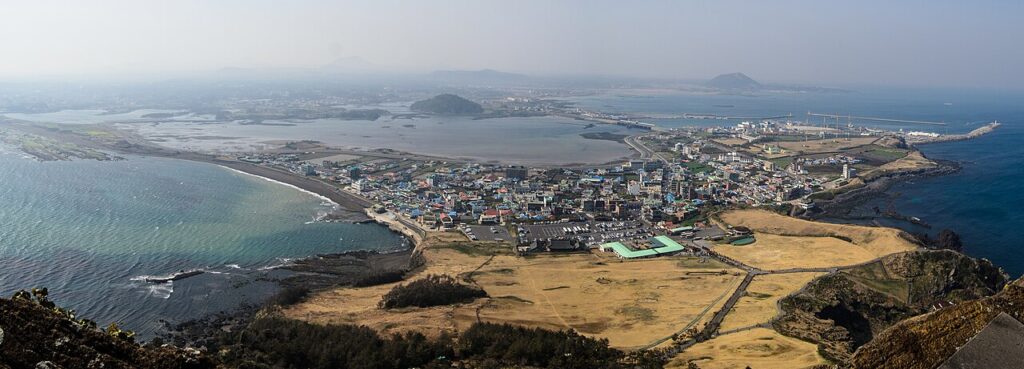
At the eastern end of the island, a great crater rises from the sea like a green crown, with steep cliffs on three sides. It is known as the sunrise peak, and many visitors climb it early to watch the sun come up. The climb on stairs takes a short time, but it can be crowded at dawn, so allow plenty of time. Check opening hours and the weather, and keep to the paths.
The lava tubes
Beneath the surface, lava once flowed through long tunnels, which have emptied and now form caves. One of the best known is Manjanggul, where visitors can walk through a section of a great lava tube. The cave is cool, dark and damp, so wear a jacket and shoes with grip. Part of the tube is open to visitors, and the rest is protected. Follow the signs and do not touch the walls.
The women divers
Jeju is famous for its haenyeo, women who dive without breathing equipment to gather seafood. Many of them are elderly, and the tradition has been recognized internationally as a cultural treasure. In some places, visitors can learn about the divers' work in a museum or watch a demonstration. Be respectful. Ask before taking photographs of people, and buy seafood fairly if you wish to support them.
Stone walls and stone grandfathers
Black stone walls surround fields, houses and graves across the island, built without mortar, and they are a defining part of the landscape. Visitors will also see statues called dol hareubang, or stone grandfathers, with round faces and large noses, which are a symbol of the island. They make good photographs and good small souvenirs, but do not climb on them or on the walls.
Walking trails and coastal paths
A network of long trails circles the island and passes through villages, fields and shorelines. You do not need to walk all of it. A short section of a few hours is a pleasant way to see the coast, and it is easy to take a bus or taxi back. Wear comfortable shoes, carry water and check the weather. The wind can be strong, especially on exposed headlands.
Gardens, forests and waterfalls
The south coast has several waterfalls that fall close to the sea, and the interior holds forests, volcanic lakes and gardens. Many of these have set opening hours and entrance fees, so check them in advance. Spring is lovely for flowers, and autumn for grasses and leaves. Choose a few places rather than many, and leave time to sit and look.
Food of the island
Jeju is known for its tangerines and citrus fruit, black pork, fresh seafood and seaweed dishes. Small restaurants and markets are the best places to try them. If you do not eat meat or seafood, ask for vegetarian dishes and be patient, since options can be limited in small places. Try a local citrus tea or a hot soup on a cold day.
Seasons and weather
Jeju has four seasons. Winters are cool and windy with moderate rain, and temperatures rarely fall below freezing. Summers are hot, humid and very wet, and a rainy period usually arrives in early summer. The south is milder than the north, and the center of the island gets the most rain. Spring and autumn are the most comfortable, though conditions can change quickly. Carry a rain jacket and layers in any season.
Getting there
Most visitors fly from Seoul, Busan and other cities in South Korea, and the flights are frequent. Ferries also run from some mainland ports, and international flights serve Jeju from nearby countries. Check schedules and book early for holidays. Bad weather can cancel flights and ferries, so allow a spare day if you have a tight schedule. Our guide to <a href="https://www.brightermornings.online/2026/08/06/gyeongju-silla-capital-guide/">Gyeongju</a> describes another quiet place on the mainland, and the two make a good pair.
Getting around
Buses connect the main towns and sights, but the island is large, and many visitors rent a car or hire a driver for a day. If you drive, take care on narrow roads, watch for strong winds and carry your license and a navigation app. Taxis are available in the towns. Plan fewer places per day than you think, since distances add up.
Where to stay
Options range from hotels in Jeju City and Seogwipo to small guesthouses in villages and by the sea. A room with a view of the coast or the mountain makes mornings special. Book ahead for holidays and weekends, and ask about heating in winter and air conditioning in summer. If you plan to see the sunrise peak, a stay in the east saves a long early drive.
A slow day on Jeju
- Early morning: watch the sunrise from the eastern coast if the sky is clear.
- Mid morning: walk a short section of a coastal trail.
- Midday: have lunch at a village restaurant and rest.
- Afternoon: visit a lava tube or a garden.
- Evening: enjoy seafood or black pork and a quiet walk by the sea.
Visiting kindly
Jeju is a home as well as a holiday island. Keep to paths, take your rubbish with you, respect private fields and stone walls and ask before photographing people. Buy from small shops and local farmers when you can. A visitor who is patient and gentle will find the island very welcoming.
Traveling with children and older relatives
Jeju is an easy island for families, with short attractions, gardens and beaches. Children usually enjoy the lava tubes, the sunrise peak stairs and the black sand beaches, but wind and cliff edges need care. Hold hands near the coast and keep everyone on the paths. For older relatives, choose sights with level paths, seats and shade, and rely on taxis or a hired driver for the long distances.
Wind, rain and plan B
The island is known for strong winds and quickly changing weather. If a mountain trail or a boat trip is closed, you can switch to indoor places such as museums, tea houses and markets, or to a sheltered garden. Keep a flexible plan and check the forecast each morning. Waterfalls and forests look beautiful in the rain, but paths can be slippery.
Photography and respect
The coast, the stone walls and the volcanic cones make wonderful pictures, especially in morning and evening light. Ask before photographing people, particularly the women divers and farmers, and do not block narrow roads or farm entrances for a shot. Avoid flying a drone near people, homes or protected areas, and check local rules first.
Souvenirs
Jeju is known for tangerine sweets, citrus tea, seaweed snacks and small stone grandfather figures. Buy from local shops and markets, and ask about the maker when you can. A small, useful gift is better than a heavy one, and your purchase helps keep local traditions alive.
Find it on the map
- Check the weather, since strong winds can close sights and cancel flights.
- Check trail and opening information before you go.
- Wear comfortable shoes and carry a rain jacket and water.
- Book early for holidays and weekends.
- Check the weather and any local news the day before, and read recent Google Maps reviews for current conditions.
- Carry water, sun protection and small change, and wear comfortable shoes.
- Dress modestly for temples and shrines: shoulders and knees covered.
Take your time. Do not hurry from one stop to the next. Sit down, look slowly, and let yourself appreciate what is in front of you. A place seen slowly is remembered for much longer.
Sources
Edited by Rehel Jemera Sausa