
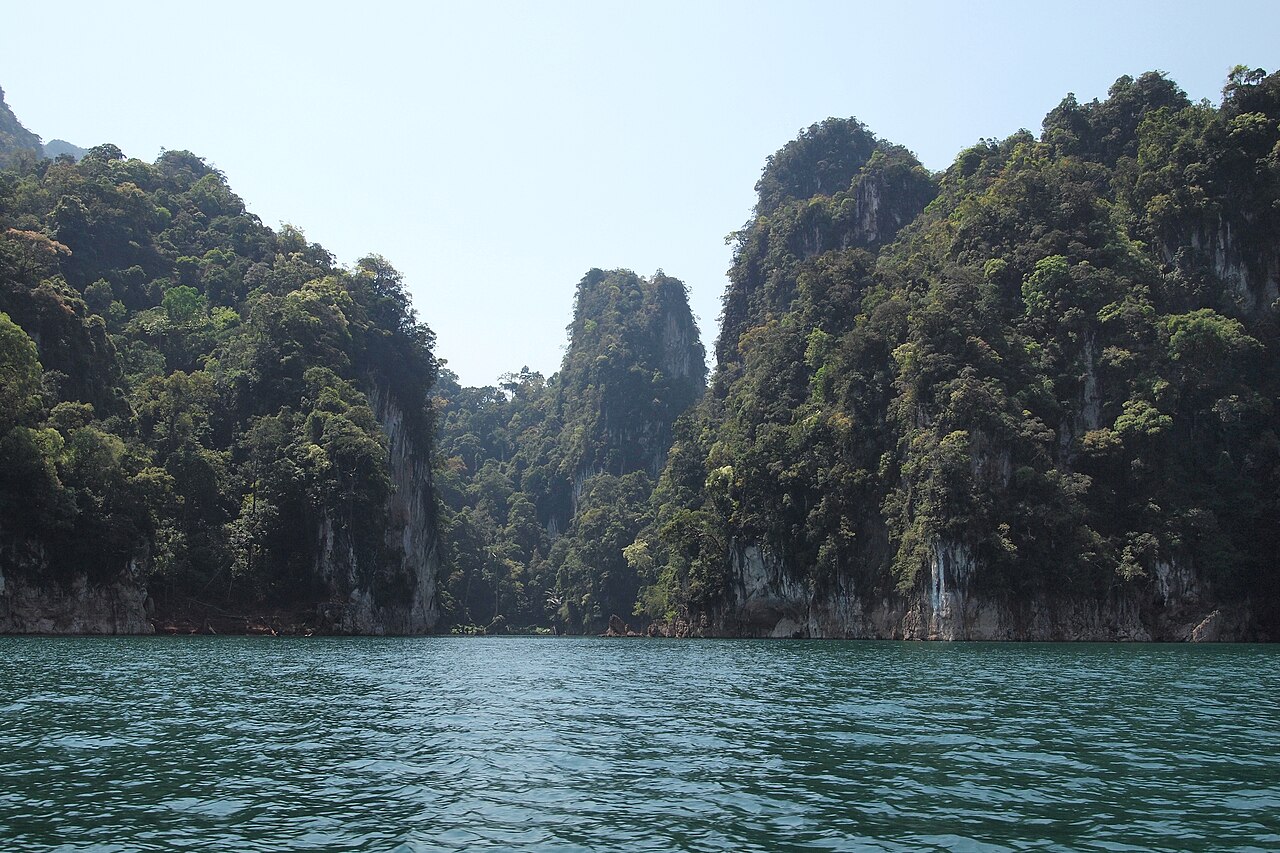
Khao Sok National Park protects one of the oldest rainforests in Southeast Asia, with steep limestone cliffs, clear streams and a large green lake. It is a place for slow walking, early morning boat rides and nights filled with the sound of frogs and insects. This guide explains the park, its landscapes and wildlife and how to visit safely and respectfully.

A rainforest in the south
Khao Sok lies in Surat Thani Province in southern Thailand and covers about 739 square kilometers. It was established as a national park in 1980. The forest is often described as older and richer in species than the Amazon, and the wider area is thought to be more than 160 million years old. That is a claim worth reading with curiosity, but there is no doubt that the forest is ancient, tall and very green. When you step under the canopy, the air feels cool, damp and alive.
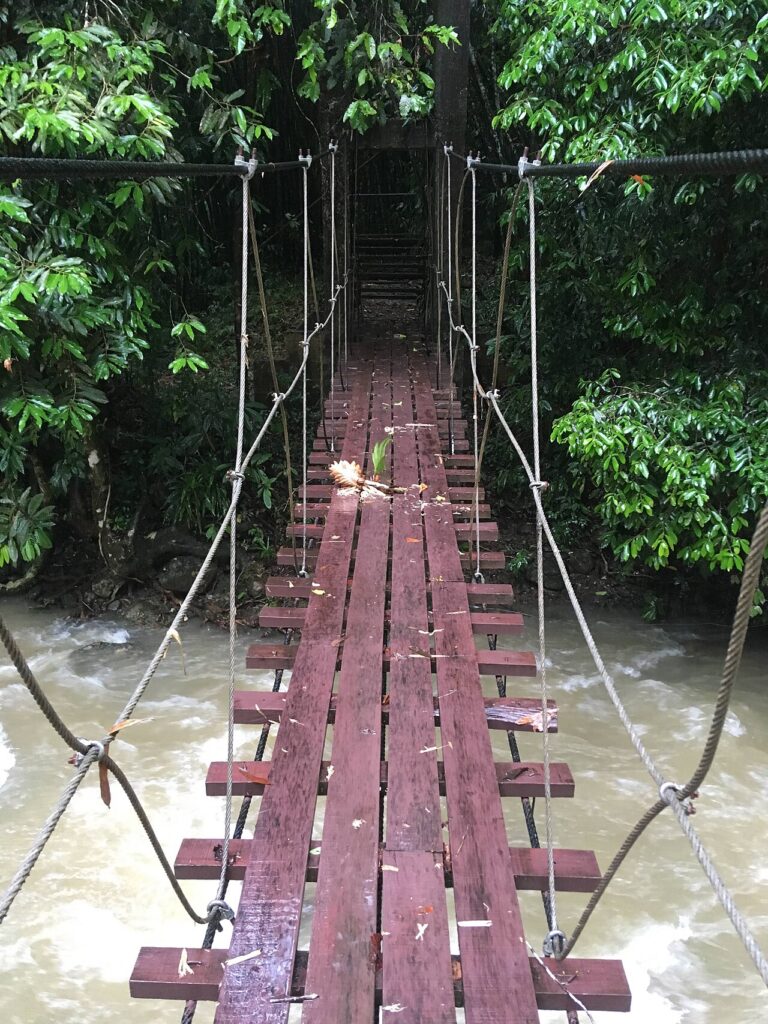
Limestone towers and green walls
The park is known for its limestone karst, steep cliffs and towers that rise out of the forest. Rain and fallen leaves have worn the rock over a very long time, shaping caves, ledges and sharp spires. The mountain range runs from north to south, with a high point of around 950 meters. Seen from the lake or from a viewpoint, the cliffs look like walls hung with green. They give the park its dramatic outline.
Cheow Lan Lake
In the middle of the park lies Cheow Lan Lake, which covers about 165 square kilometers inside the park. It was formed by the Ratchaprapha Dam, which is 94 meters high. Drowned forest and limestone peaks rise from the water, and the lake is quiet in the early morning, when mist hangs low. Boat trips take you between the cliffs and into side channels. Wildlife may appear at the edge of the water, and the light is soft at dawn and dusk.
Wildlife of the forest
Khao Sok shelters many animals, including Malayan tapirs, Asian elephants, sambar deer, gaur, serow and pig-tailed macaques. Tigers are mentioned on many websites, but there is no recent camera-trap evidence of them. Most visitors see monkeys, birds, insects and butterflies, and perhaps a hornbill. The endangered Asian arowana fish is said to live in the area, and the forest also holds rare palms. Keep your distance, stay quiet and never feed animals.
The giant flower
The park is famous for Rafflesia kerrii, a huge parasitic flower that blooms for only a short time. It has no leaves or roots of its own and lives inside a host vine. It has a strong smell and is a rare sight, so do not expect to see it on every trip. If you want to look for one, ask rangers or local guides about the season and the places where it might appear. Never touch it or step on the vines around it.
Caves and underground rivers
Several caves are known in the park, including Diamond Cave, Khang Cow Cave and Nam Talu Cave. Nam Talu is about twelve kilometers from the park headquarters and is reached by boat across the lake. Caves can be wet, dark and slippery. Go with a guide, wear shoes with grip, carry a light and follow safety instructions. Do not touch the formations, which take thousands of years to grow, and keep away from bats.
Walking the trails
Maintained trails begin at the western entrance. Local guides are recommended for most walks, and night tours require one. Wear long trousers and shoes with grip, since the forest floor can be slippery and leeches may be present in wet weather. Carry plenty of water, insect repellent and a small first-aid kit. Take it slowly. The forest is full of small sights, such as fungi, ferns and the sound of streams.
Seasons and climate
The wet season runs from late April to December, and rainfall peaks around September, while January is the driest month. Temperatures stay between about twenty-two and thirty-six degrees Celsius throughout the year. The drier months are more comfortable for walking and boat trips, though the forest is green all year. In the wet season, streams can rise quickly, trails may close and leeches are more common. Check conditions before you go and be ready to change plans.
Staying on the lake
Many visitors stay on the lake in simple floating accommodation, with no road access and few distractions. The experience is quiet, but facilities are basic, and electricity and mobile coverage may be limited. Ask about safety equipment, food and the rules for wildlife and noise, and choose operators who care for the environment. Bring a flashlight, insect repellent and a book. It is a place for listening to the night, not for crowded entertainment.
Staying near the park entrance
If you prefer a bed on land, there are guesthouses and small resorts near the park entrance. They give easy access to the trails and the main road. Book ahead in the dry season, and ask your host for suggestions on guides and boat operators. Evenings are peaceful, with frogs and insects providing the soundtrack. Choose a place that explains how it treats its waste and water.
Getting there
The park lies along a main road in southern Thailand, and the nearest large city is Surat Thani. Buses, vans and private cars connect the park to Surat Thani, Phuket, Krabi and Khao Lak. The journey can take several hours, so plan your timing and avoid driving after dark. Many travelers arrive as part of a trip along the Andaman coast. If you enjoy national parks, our guide to <a href="https://www.brightermornings.online/2026/08/07/erawan-national-park-guide/">Erawan National Park</a> describes a very different forest in the west of the country.
What to bring
Pack lightweight long clothes, a rain jacket, swimwear, a quick-dry towel, a hat and good walking shoes or sandals. A dry bag helps protect phones and cameras. Insect repellent is essential, but avoid applying it right before swimming. Bring a refillable water bottle, a headlamp and a small bag for your rubbish. Cash is useful, since cards are not always accepted in remote places.
Safety and care
- Follow ranger and guide advice, especially near water and caves.
- Do not swim in fast water or after heavy rain.
- Keep your distance from wildlife and never feed animals.
- Carry out all rubbish and avoid single-use plastic.
- Keep valuables dry and secure.
A slow day in Khao Sok
- Early morning: take a boat trip on the lake while the mist is still on the water.
- Mid morning: walk a short forest trail with a guide.
- Midday: rest in the shade and have a simple lunch.
- Afternoon: swim in a safe pool or visit a cave with a guide.
- Evening: listen to the forest as the light fades.
Visiting with respect
Khao Sok is a protected area and a home for wildlife, not a theme park. Keep your voice low, stay on marked trails and take nothing from the forest. Hire local guides and choose operators who share their income with nearby communities. A gentle visit helps ensure that the forest is still here for the next traveler.
Traveling with children and older relatives
Khao Sok can be enjoyed by families, but it is not a place for rushed visits. Children do well on short trails and boat rides, as long as they wear life jackets and stay close to adults. Choose easy walks with a guide, take frequent breaks and keep everyone hydrated. For older relatives, a room near the park entrance and a short boat trip on the lake may be more comfortable than a long hike or a night on the water.
Leeches, insects and comfort
In the wet season, leeches are common on forest trails. They are harmless but unpleasant, and long socks, trousers and repellent help keep them away. Check your legs when you stop, and remove any leech calmly with a finger or a flat edge rather than pulling hard. Mosquitoes can be active in the evening, so bring repellent and wear light long sleeves. A little preparation makes the walk much more pleasant.
Night sounds and night walks
The forest is lively after dark, with frogs, insects and sometimes owls or other nocturnal animals. Night tours must be guided, and they are a good way to see creatures that hide by day. Wear a headlamp with a red or low setting if you have one, stay with your guide and keep your voice low. Do not shine bright lights into animals’ eyes, and never try to touch what you find.
Combining Khao Sok with the coast
Khao Sok is a convenient stop between the Andaman coast and the Gulf of Thailand. Many travelers spend a night or two among the cliffs and the lake before returning to the beach, and the contrast makes both parts of the trip feel richer. Plan a buffer day for transport, since journeys by road can take longer than expected in wet weather.
Find it on the map
- Check park notices, trail conditions and weather before you go.
- Wear shoes with grip and long, light clothing.
- Hire a local guide for caves and night walks.
- Bring a dry bag, water, insect repellent and a headlamp.
- Check the weather and any local news the day before, and read recent Google Maps reviews for current conditions.
- Carry water, sun protection and small change, and wear comfortable shoes.
- Dress modestly for temples and shrines: shoulders and knees covered.
Take your time. Do not hurry from one stop to the next. Sit down, look slowly, and let yourself appreciate what is in front of you. A place seen slowly is remembered for much longer.
Edited by Rehel Jemera Sausa