

In the middle of one of the busiest cities in Asia lies a tropical garden of lakes, lawns and old rainforest. The Singapore Botanic Gardens is a place where office workers jog before dawn, families picnic on weekends and visitors from around the world come to see the orchids. This guide explains the gardens' story, the main areas and how to enjoy them without the heat and the rush.

A garden with a long story
The first botanical garden in Singapore was created in 1822 by Stamford Raffles on a hill in the city, but it closed after a few years. The present gardens were founded on their current site in 1859 by an agricultural and horticultural society, and the government took over their management in 1874. Today they are run by the national parks authority.
In 1888, a scientist named Henry Ridley became director, and he promoted the planting of rubber trees. That work helped Malaya become the world's leading producer of natural rubber. Later, the gardens became known for breeding orchids, and a hybrid called Vanda Miss Joaquim was chosen as Singapore's national flower in 1981.
A World Heritage garden
In 2015, the gardens were listed by UNESCO, the first tropical botanic garden and only the third botanic garden in the world to receive the honor. They cover about 82 hectares and stretch roughly two and a half kilometers from north to south. More than ten thousand species of plants grow here, and millions of visitors come each year.
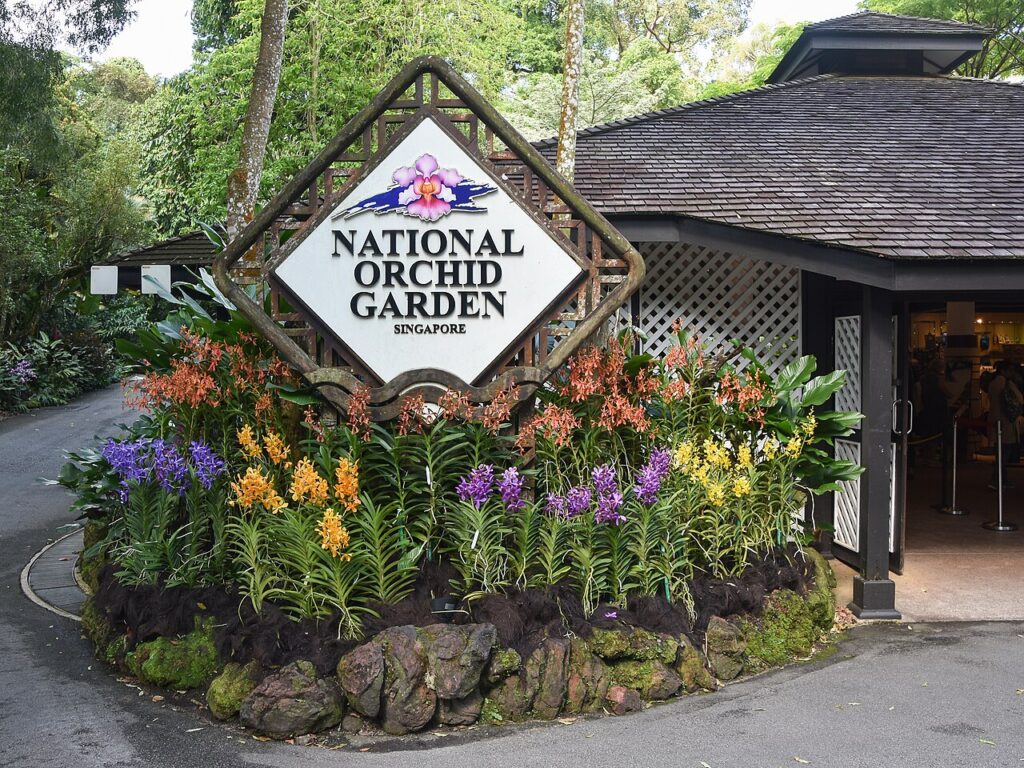
The National Orchid Garden
The National Orchid Garden is one of the great highlights. It holds roughly a thousand species and two thousand hybrids, displayed in shaded arches, misty corners and terraces. A special area is devoted to orchids named after visiting dignitaries. Most of the gardens are free to enter, but this section requires a ticket, so check the official website for details. Visit early, when the flowers look fresh and the paths are quiet.
The rainforest
Near the center of the gardens lies a patch of old rainforest of about six hectares, older than the gardens themselves. More than three hundred plant species have been recorded in it, and many are rare in Singapore. Step under the canopy and the air cools, the sound changes and the city seems to fade away. Stay on the paths, listen for birds and take a moment to stand still.
Lakes and lawns
The gardens have several lakes, each with its own mood. Swan Lake, excavated in the 1860s, is the oldest, and graceful swans glide across it. Symphony Lake hosts a stage where free concerts are held on some weekends. The Eco-Lake is home to black swans and water plants. Sit on a bench, bring a book and let the afternoon slip by. Do not feed the birds or fish.
A garden for children
The Jacob Ballas Children's Garden, opened in 2007 and expanded later, was the first children's garden in Asia. It is designed for play, discovery and learning, with water features, tree houses and gardens that children can explore. It is a good stop for families, as long as you agree on a meeting point and keep little ones within sight.
The Ginger Garden and more
The Ginger Garden covers about a hectare and includes a restaurant in a lovely setting. Nearby, the Botany Centre has a green roof and leaf-imprint corridors that are fun to explore. Palm Valley, the Bandstand and the Sun Garden each offer a different atmosphere. You do not need to see everything. Choose one or two areas and take your time.
Getting there
The main entrance is at Tanglin Gate on Holland Road, and Singapore's metro system has a station named Botanic Gardens right at one of the gates. Another nearby station is Napier. Walking from the station into the gardens takes only a few minutes, and the paths are smooth, which makes them comfortable for strollers and wheelchairs.
Heat, rain and timing
Singapore is hot and humid all year, with sudden rain showers, especially in the afternoon. The best time to visit is early in the morning, when the air is cooler and the light is soft. Bring a hat, water, sun protection and a small umbrella, and plan a covered rest stop if a storm arrives. The gardens are open long hours each day, so you can choose a quiet moment that suits you.
A relaxed morning plan
- Early: enter at Tanglin Gate and walk toward the lakes.
- Mid morning: visit the National Orchid Garden while it is quiet.
- Late morning: walk under the rainforest canopy.
- Midday: have a light lunch and rest in the shade.
- Afternoon: visit the children's garden or enjoy a lawn picnic.
Visiting with care
- Stay on paths and off flower beds and lawns that are marked closed.
- Keep your voice low near wildlife and in the rainforest.
- Take your rubbish with you or use the recycling bins.
- Do not pick flowers or disturb animals.
- Respect other visitors who come here to exercise or practice quiet activities.
Photography and quiet
The best light is in the first hour after sunrise and in the late afternoon. Orchids photograph well in soft light, and the lakes reflect the trees on still mornings. Be patient with other visitors, avoid blocking the paths and ask before photographing people. The gardens reward unhurried looking, and the best images are often the ones you were not expecting.
Walking the gardens in sections
The gardens are long and narrow, and trying to see everything in one visit can be tiring. Several gates serve different corners, including Tanglin Gate, and you can plan your route by choosing a gate, walking one section and leaving by another. A good approach is to treat the gardens as three or four small outings: the lakes and lawns, the rainforest, the orchids and the gardens for children. Take a map or save one on your phone, and do not worry about missing a corner.
Birds, lizards and other wildlife
Even in a busy city, the gardens attract wildlife. You may see birds such as kingfishers and herons, squirrels in the trees and monitor lizards near the water. Keep a respectful distance, never feed the animals and keep children close when you are near ponds and banks. If you stand still for a few minutes beside a lake, you will often notice more than you did while walking.
Resting and eating
There are restaurants and cafes inside the gardens, as well as places to buy drinks, and plenty of benches in the shade. Hours change, so check before you plan a meal. Many visitors bring a water bottle and a small snack and picnic on a lawn where it is allowed. Whatever you choose, take a proper break in the middle of the day, since the heat can be tiring even for people who are used to it.
Comfort and accessibility
Most of the main paths are paved and wide, which makes them comfortable for strollers, wheelchairs and older visitors, though some areas have gentle slopes. Check the map or ask a staff member about accessible routes and restrooms before you set out. Carry a hat and a light layer, and wear shoes that suit long walks.
Dawn, weekends and quiet moments
Many local people visit at dawn to jog, stretch or practice tai chi, and you may share the paths with exercise groups. Step aside to let them pass, and keep your voice low. Weekends are busier than weekdays, especially in the late morning. If you want space to think, come early on a weekday and choose a bench by the water.
Combining the gardens with the city
The gardens are within a short ride of the Orchard Road shopping area, and they make a pleasant contrast to the malls and streets. Some visitors spend the morning here and the afternoon in an air-conditioned museum or a favorite restaurant. A day that mixes green space and city life is easy to organize and does not require a long journey.
A slow-looking exercise
Before you leave, choose one tree, one flower or one view and look at it for five minutes without taking a picture. Notice its shape, color and sound. It is a small habit, but it changes how you see the rest of the gardens, and it is the kind of attention that a botanic garden rewards.
Find it on the map
- Check opening details, ticketing for the orchid garden and any events on the official website.
- Carry a hat, water, sun protection and a small umbrella.
- Wear comfortable shoes for long, flat walks.
- Arrive early to avoid heat and crowds.
- Check the weather and any local news the day before, and read recent Google Maps reviews for current conditions.
- Carry water, sun protection and small change, and wear comfortable shoes.
- Dress modestly for temples and shrines: shoulders and knees covered.
Take your time. Do not hurry from one stop to the next. Sit down, look slowly, and let yourself appreciate what is in front of you. A place seen slowly is remembered for much longer.
Edited by Rehel Jemera Sausa