

Taman Negara is the largest national park in Peninsular Malaysia, a vast area of old rainforest, rivers and mountains. Getting there involves a long river journey, and the park rewards patience with quiet trails, high walkways and the sounds of the forest. This guide explains the park, its people and wildlife and how to visit carefully.

A park of forest and rivers
Taman Negara covers about 4,300 square kilometers and spreads across three states in Peninsular Malaysia: Pahang, Kelantan and Terengganu. Pahang holds the largest part. The park was established in the late 1930s as King George V National Park and was renamed after independence. Its heart is a tangle of hills, rivers and rainforest, with Mount Tahan, the highest peak in Peninsular Malaysia at about 2,187 meters, rising in the interior.
An ancient rainforest
The rainforest is estimated to be more than 130 million years old. Some sources call it among the oldest in the world, while others point out that rainforests in Australia are older still. Either way, the forest has survived through great changes in climate. About ten thousand plant species have been recorded, along with hundreds of birds, reptiles, fish and mammals. Walking under the canopy, you feel the age of the place.
The people of the forest
The park lies on the traditional lands of several Orang Asli groups, including the Batek, and park law recognizes their right to use the forest. Some communities live near the entrance, and visits to villages can be arranged through local guides. Treat these visits as meetings with neighbors, not shows. Ask permission before taking photographs, listen carefully and buy crafts directly if you wish to support them.
Wildlife
Taman Negara shelters Malayan tigers, Asian elephants and the Malayan gaur, though most visitors will never see these shy animals. More likely sightings include birds such as the great argus, monkeys, lizards, insects and fish. The Malaysian mahseer, a prized freshwater fish, is protected in the Tahan River. Keep your distance, stay quiet and follow your guide. Never feed animals, and avoid bright lights at night.
The river journey
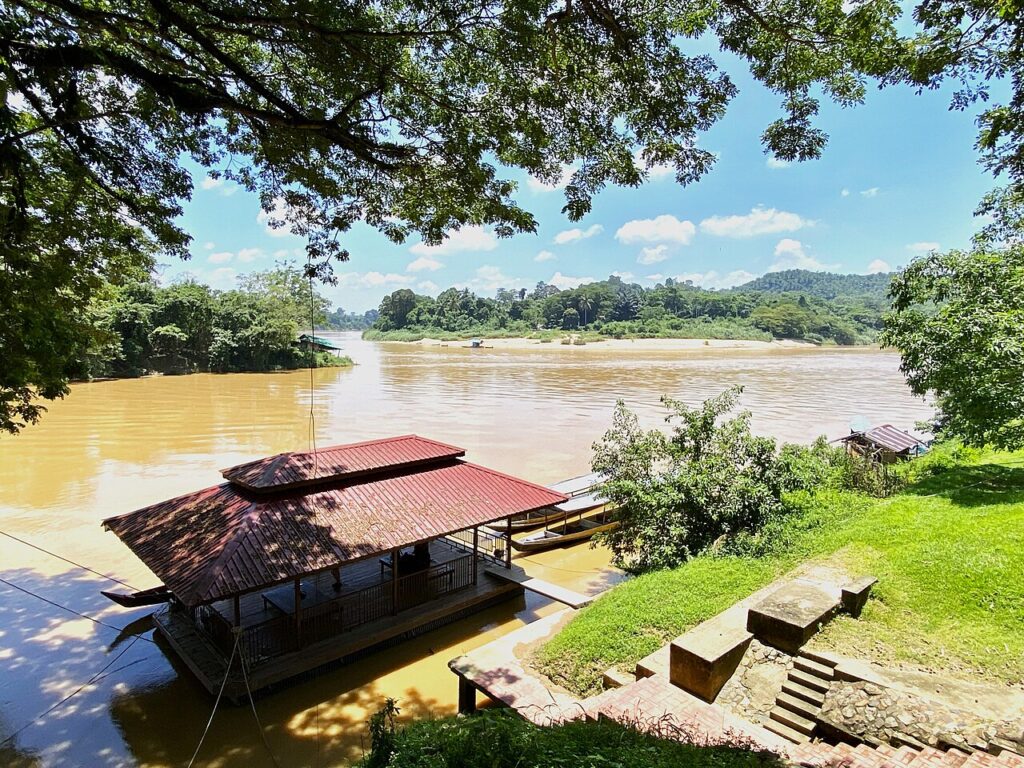
The classic route to Kuala Tahan, where the park headquarters stand, begins at the Kuala Tembeling jetty and follows the river by long boat for about two and a half to three hours. The journey is slow and quiet, past forest, sandbanks and villages. Sit back and enjoy the passing scenery. Wear sun protection, keep valuables in a dry bag and listen to the boatman's instructions. Check whether the boat service is running before you plan.
Kuala Tahan
Kuala Tahan is the main base for visitors, with the park headquarters, guesthouses, restaurants and tour operators. Floating restaurants and riverside cafes sit across the river from the park. It is a simple, friendly place, and boats shuttle people across the water. Register at the park office, and ask about trail conditions and permits before you set out.
The canopy walkway
A walkway strung between tall trees allows visitors to walk high above the forest floor. From this height, you see the tops of the trees and hear birds that are hard to spot from the ground. The bridges move slightly, so walk calmly and keep to the number of people allowed at one time. Do not run or bounce. Hours and rules change, so check at the headquarters.
Caves and rapids
The park has several trails to natural features. The Gua Telinga cave system is a short walk from Kuala Tahan, and visitors with a guide can explore its passages. The Lata Berkoh rapids on the Tahan River are another popular destination, reached by boat and on foot. Wear shoes with grip, carry a light, follow your guide and do not touch the formations or disturb the bats.
Trekking and Mount Tahan
Serious hikers can climb Mount Tahan from Kuala Tahan or Merapoh, an expedition that takes several days and requires a guide, permits and experience. Casual visitors can walk shorter trails of a few hours. Pace yourself, drink plenty of water and be ready to turn back if the weather changes. Ask the headquarters for current advice about trails.
Seasons and weather
The park is wet for much of the year, and the forest is green in every season. Heavy rain, especially in the monsoon months at the end and start of the year, can raise rivers and affect boat services and trails. The drier months are generally more comfortable for walking, but conditions vary. Ask your guesthouse or tour operator about the current situation and pack a rain jacket, quick-dry clothes and insect repellent.
Permits and rules
All visitors need permits from the Department of Wildlife and National Parks, covering entry and certain activities such as fishing or camera use. Many tour operators bundle permits with transport and guides. Follow ranger instructions, keep to marked trails and carry out your rubbish. The park is protected for good reasons, and its rules exist to keep both visitors and wildlife safe.
Getting there
From Kuala Lumpur, buses take about three to four hours to Jerantut, and trains also stop there. From Jerantut, you travel to the Kuala Tembeling jetty and continue by boat, or take a road route to Kuala Tahan. Many travelers book a package with transport, permits and a guide. Allow a full day for the journey and a buffer in case of delays. Our guide to <a href="https://www.brightermornings.online/2026/09/25/cameron-highlands-malaysia-slow-guide-tea-and-mossy-forest/">Cameron Highlands</a> describes a very different Malaysian landscape that is easy to combine.
What to bring
Pack lightweight long clothes, a rain jacket, sturdy shoes, a hat, a refillable water bottle and insect repellent. A headlamp, a dry bag and a small first-aid kit are useful. Leeches can be present on trails in wet weather, so socks and trousers help. Bring cash, since not every place accepts cards, and download maps before you travel.
A slow day in Taman Negara
- Morning: take a short guided walk and listen for birds.
- Mid morning: walk the canopy walkway when it is quiet.
- Midday: rest at the riverside and have a simple lunch.
- Afternoon: visit a cave or a rapid with a guide.
- Evening: join a guided night walk or sit by the river and listen.
Visiting with respect
Taman Negara is a refuge for wildlife and the home of people who have lived in the forest for generations. Stay on the trails, keep your voice low and leave nothing behind. Hire local guides, pay a fair price and treat the forest as something to listen to as well as look at.
Traveling with children and older relatives
Taman Negara can be enjoyed by families who are prepared for a simple stay. Children often love the boat ride and the canopy walkway, but long jungle trails may be too hot and tiring. Plan short walks, carry plenty of water and watch for slippery roots. For older relatives, the river journey is long, so check that the boat has seats with shade, and choose lodging near the headquarters to keep walking distances short.
Leeches and insects
Leeches are common on forest trails, especially after rain. They are harmless, but unpleasant. Long socks, trousers and repellent help, and a quick check of your legs when you rest is a good habit. Remove a leech gently with a fingernail or a flat edge rather than pulling hard. Insect repellent is also useful against mosquitoes in the evening.
Night walks and wildlife hides
The forest is full of life at night, with frogs, insects and sometimes small mammals moving through the undergrowth. Guided night walks are a good way to see them safely. Observation hides near water or natural salt licks may also be available in some areas. Ask the park office about current arrangements, stay quiet and keep lights low so that animals are not disturbed.
Photography in the forest
The forest is dim under the canopy, so a steady hand and patience matter more than expensive equipment. Move slowly, listen for birdsong and never chase animals for a picture. Avoid flash, keep your distance and respect people when you visit villages. Often the most memorable moments, such as light falling through the leaves, are the ones you simply watch.
Combining the park with other places
Many travelers combine Taman Negara with Kuala Lumpur, the Cameron Highlands or the east coast. Because the journey in and out takes time, plan at least two nights in the park so that you are not spending the whole visit traveling. Build in a spare day in the monsoon season, when river conditions can delay boats.
Find it on the map
- Check park rules, boat services and trail conditions before you go.
- Arrange permits and a guide in advance.
- Pack a rain jacket, insect repellent and shoes with grip.
- Carry a dry bag for phones and cameras.
- Check the weather and any local news the day before, and read recent Google Maps reviews for current conditions.
- Carry water, sun protection and small change, and wear comfortable shoes.
- Dress modestly for temples and shrines: shoulders and knees covered.
Take your time. Do not hurry from one stop to the next. Sit down, look slowly, and let yourself appreciate what is in front of you. A place seen slowly is remembered for much longer.
Sources
Edited by Rehel Jemera Sausa