
Hue was the capital of Vietnam under the Nguyen emperors, and its walled citadel, royal tombs and pagodas make it one of the country's richest historical places. It is also a gentle city on a river, which makes it a good place to slow down after the rush of Hanoi or Ho Chi Minh City.
A short history
Hue became the capital of the united country in 1802, when Emperor Gia Long founded the Nguyen dynasty. The family ruled from Hue until 1945, and the city was the political and cultural center of Vietnam for more than a century. The Complex of Hue Monuments was listed as a UNESCO World Heritage Site in 1993.
The city suffered heavy damage in the twentieth century, especially during the war in 1968, and restoration work has continued for many years. As a visitor you will see both beautifully restored buildings and areas that are still being repaired. It helps to approach the site with patience and curiosity.
The Citadel and the Imperial City
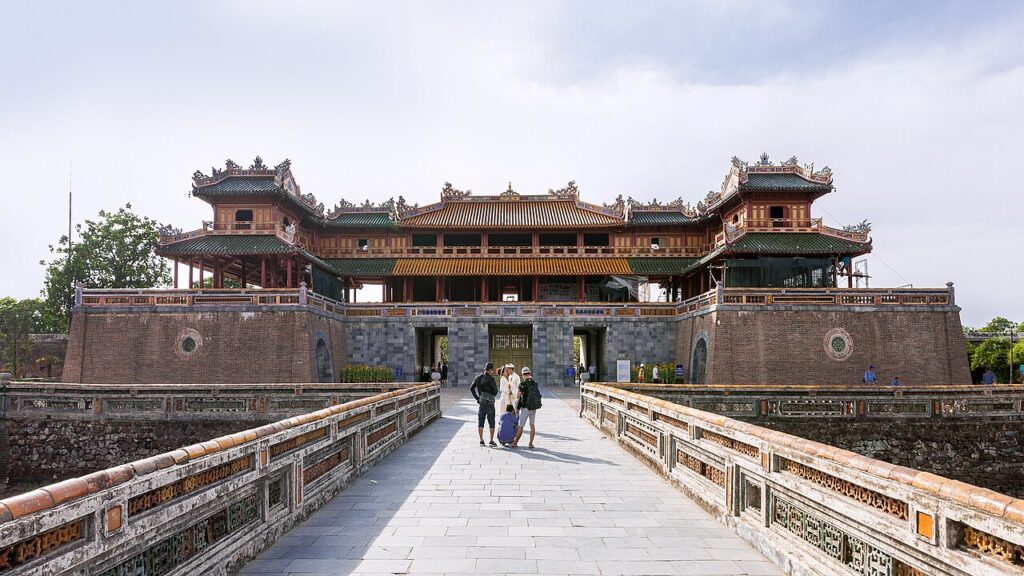
The citadel is a large walled enclosure on the north bank of the Perfume River. Inside it lies the Imperial City, with its own walls and gates, and inside that the Forbidden Purple City, which was once reserved for the emperor and his household. The main entrance is the Ngo Mon Gate, a grand structure with a balcony from which the emperor appeared on important occasions.
Walking through, you will see halls, courtyards, gardens, pavilions and galleries. Some buildings have been restored with bright colors, while others are quiet ruins. Take your time to notice details, such as roof tiles, carved dragons and the patterns on doors and floors.
The complex is large, and a full visit can take several hours. An audio guide or a local guide can bring the buildings to life and explain the history that signs do not cover.
Beating the heat
Hue can be hot and humid for much of the year. The paving in the Imperial City is exposed to the sun, and there are not many shaded paths. Go in the early morning, wear a hat, and carry water. After rain the old stones can be slippery, so wear shoes with a good grip.
Many visitors choose to visit the Citadel in the morning, rest at midday, and spend the afternoon or evening along the river.
The royal tombs and pagodas
Outside the city, along the Perfume River, lie the tombs of several Nguyen emperors. Each tomb is a sort of garden palace, designed by the emperor himself before his death, with lakes, pavilions, pine trees and quiet walkways. They are far more peaceful than the busy streets of the city, and many visitors say they enjoyed them more than they expected.
You can reach some of them by road, and others by boat along the river. Because the tombs are spread out, it is wise to choose one or two instead of trying all of them.
Thien Mu Pagoda is another well-known site. It stands on a hill above the river and has a tall seven-story tower. It is a working temple, so dress modestly and remain quiet.
Food in the old capital
Hue is famous for its food, which has a refined flavor and a royal background. The cuisine includes small dishes, delicate rice cakes, noodle soups with a spicy broth and many vegetarian options connected with the city's Buddhist temples. Many dishes are served in small portions, so it is easy to sample several.
If you are new to the flavors, ask for mild versions and try one or two dishes at a time. A table with a few small plates and a glass of tea is a lovely way to rest after a morning of walking.
An evening by the river
In the evening, the Perfume River becomes a place to stroll. Lights reflect on the water, and boats pass slowly. Many travelers like to sit on the riverbank, enjoy a drink and watch the city quiet down. It is a good way to end a day.
When to visit
The drier months from about February to April are usually the most comfortable. The weather in Hue can be rainy, especially in the later part of the year, and storms are possible. Check the forecast, and plan some indoor options such as museums or cafes.
Respect and care
The Imperial City is a heritage site and a place of national memory. Please do not climb on walls, sit on old structures, or touch painted surfaces. Keep your voice low, follow signs about restricted areas, and dispose of litter carefully.
Reading the layout of the citadel
It helps to understand the plan before you walk. The citadel was built with ideas from Vietnamese tradition and from the geomancy of the time, in which the river, the hills and the direction of the gates all had meaning. The Perfume River flows in front of the complex, and the hills beyond were treated as natural screens. When you stand at the main gate and look back toward the water, you can feel how carefully the place was set in the landscape.
Ceremonial halls and quiet gardens
Within the Imperial City you will find large ceremonial halls, covered galleries and small gardens that once belonged to the court. The big halls give a sense of the scale of imperial life, while the gardens and ponds show a quieter side. Spend longer in the gardens than you expect, because they are cooler and less crowded and make good places to rest.
Hiring a cyclo or a bicycle
Some visitors enjoy moving between sites by bicycle or cyclo, a traditional passenger cycle. If you do, keep to the shaded streets, carry water, and agree the route and the price in advance. Traffic in Hue is much calmer than in larger cities, which makes cycling a pleasant way to see the town.
A slow two-day plan
On the first day, visit the citadel in the cool of the morning, rest at midday and walk by the river in the late afternoon. On the second, choose one or two royal tombs or pagodas, and travel by taxi or bicycle if the distances feel long. Keep one hour free each day for tea, since Hue is a city that rewards sitting still. Check current opening arrangements and ticketing locally before you go.
Traveling with children or older relatives
The citadel is large, with wide courtyards and little shade, and the tombs lie some distance from the center. Plan short visits, carry water and a hat, and take breaks in the shade. Children may enjoy the open spaces, the carved gates and the river, while older relatives may prefer a cyclo ride and a quiet cafe. A calm pace makes the day enjoyable for everyone.
Rain, heat and the river
Hue can be hot in summer and drizzly and cool in winter, and the rainy season brings heavy showers and occasionally floods. Check the forecast before you travel, and keep a light rain jacket with you. In rain, the old stone and moss look beautiful, but steps can be slippery. A flexible plan lets you choose between the citadel, a museum and a warm bowl of noodles.
Taking home something small
Hue is known for craftsmanship, from conical hats to embroidery and small ceramics. If you buy something, choose items made locally, ask where they come from and bargain politely. A small, well-made object is a better souvenir than a pile of cheap items. Remember that the best memory is often a quiet moment in a courtyard, not something you can carry.
A last word on Hue
Hue is a city of memory, and it asks for patience. Walk slowly through the gates, notice the patterns of tile and stone and let yourself imagine how the courts once looked. You do not need to see everything. A few hours of attention can be more rewarding than a day of rushing.
Find it on the map
- Go early to avoid the heat, and wear shoes with good grip because the stones can be slippery after rain.
- Consider an audio guide or a local guide to understand the history.
- Choose one or two royal tombs rather than trying all of them.
- Check the forecast, as central Vietnam can have heavy rain, especially later in the year.
- Check the weather and any local news the day before, and read recent Google Maps reviews for current conditions.
- Carry water, sun protection and small change, and wear comfortable shoes.
- Dress modestly for temples and shrines: shoulders and knees covered.
Take your time. Do not hurry from one stop to the next. Sit down, look slowly, and let yourself appreciate what is in front of you. A place seen slowly is remembered for much longer.
Edited by Rehel Jemera Sausa