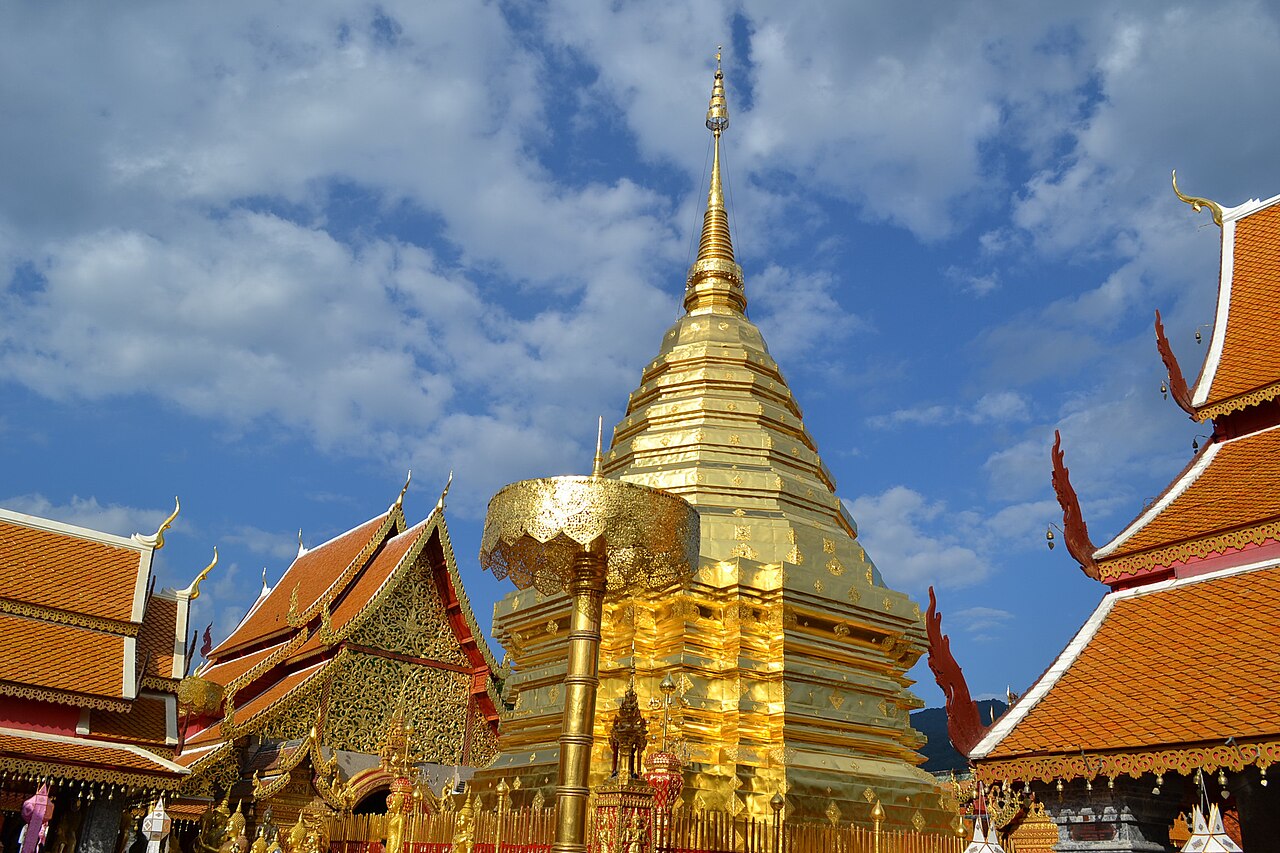
Wat Phra That Doi Suthep sits high on a forested mountain above Chiang Mai, its golden stupa shining through the trees. For more than six hundred years it has been one of the most important temples in northern Thailand, and for many visitors it is the heart of a trip to the city. This guide explains the legend, the climb and the views, and how to visit with calm and respect.
The mountain above the city
The temple stands on Doi Suthep, a mountain about 15 kilometers from the center of Chiang Mai, at an elevation of roughly 1,050 meters. The air is cooler than in the city, and the forest around it is green and quiet. On a clear morning, you can look back over the rooftops of Chiang Mai and see how the city sits in its valley, ringed by hills.
Because of the climb, the temple feels removed from everyday life. It is a place to slow down and look.

The legend of the white elephant
According to tradition, a monk from the Sukhothai Kingdom named Sumanathera had a dream that led him to a relic, which many believe to be a bone of the Buddha. When the relic broke into two pieces, King Kue Na of Lanna placed one piece on the back of a white elephant and released it into the jungle. The elephant climbed Doi Suthep, trumpeted three times and lay down. People took this as a sign to build a temple at that place, and the first stupa is said to have been raised in 1383.
You do not have to share the belief to enjoy the story. It explains why the temple sits where it does, and why the white elephant appears in carvings and statues around the site.
The serpent staircase
From the car park, visitors climb 309 steps lined with long serpent balustrades, known as nagas, which seem to flow down the mountain. The climb is steady rather than difficult. Take it slowly, stop at the landings and enjoy the sound of bells and birds. If you cannot manage the steps, ask at the site about other ways to reach the terrace, since arrangements for lifts and trams change from time to time.
The golden stupa
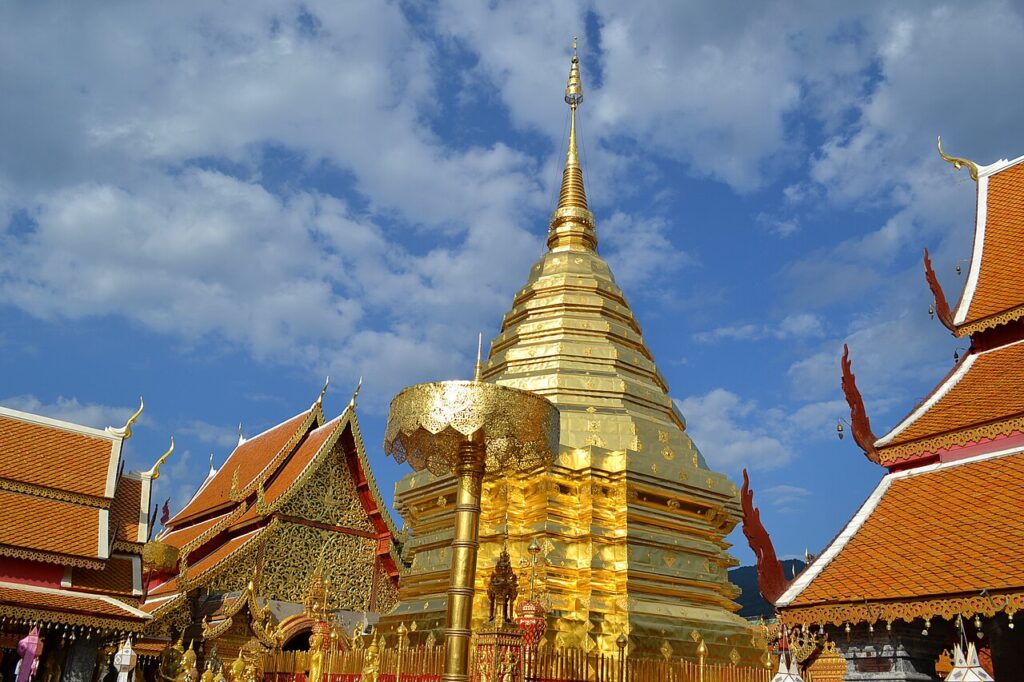
At the top, the gold-plated stupa rises about 24 meters and dominates the terrace. It is the most sacred part of the complex. The style shows the influence of Sukhothai art, and the umbrella at the top reflects centuries of Burmese influence in the north. Local people walk clockwise around the stupa, often carrying flowers, candles and incense, and you are welcome to join quietly or watch from the side.
Dressing and behaving
- Cover your shoulders and knees, and bring a scarf if you need one.
- Remove your shoes before entering the temple grounds and the inner buildings.
- Keep your voice low and your phone silent.
- Never point your feet at a Buddha image or a monk, and never climb on statues.
- Women should avoid touching monks or handing things to them directly.
Views over Chiang Mai
A viewing terrace gives wide views over the city and the plain. In the cool season, the morning air can be crisp and clear, while the burning season from about February to April may leave a haze. Late afternoon light is often soft, but the temple becomes busier with groups, so decide whether quiet or color matters more to you. Whichever you choose, take a minute to sit and look rather than rushing back to the car.
Getting there
Shared red trucks called songthaews run from the city to the temple, and you can also take a taxi or drive yourself. The road winds up the mountain with many curves, so drive slowly and watch for motorbikes. Some visitors walk or hike up a forest trail from the city, which takes time and effort, so it is best with a guide or a clear map, good shoes and plenty of water.
The best time to go
Early morning is the best time. The air is cool, the light is soft and the crowds are small. Midday can be hot and busy, and the stone steps can be uncomfortable in strong sun. In the rainy season, clouds may cover the views, but the forest is green and the mood is atmospheric. Check the weather and plan a flexible day.
Traveling with children and older relatives
The stairs are the main challenge. Take plenty of breaks, hold children's hands and keep water in your bag. For older relatives, arrive early, walk slowly and consider resting at the lower landings while others continue. A relaxed visit with a seat in the shade is better than an exhausting one.
Beyond the temple
The mountain is part of a larger area of forest, with viewpoints, waterfalls and villages. A royal winter palace stands nearby, and its gardens can be visited when the family is not in residence, so check Google Maps before you plan. If you have time, a slow cafe stop on the way down makes a nice end to the morning. Our guide to <a href="https://www.brightermornings.online/2026/09/14/6-garden-cafes-around-chiang-mai/">six garden cafes around Chiang Mai</a> suggests calm places to rest.
Offerings and donations
Small donations are welcome and can be made in boxes around the site. Give what you wish, and do not feel pressured to buy anything. Flowers, candles and incense are sold near the stairs, and you can offer them at the stupa if you like. Follow local people for the order and manner of the offering, and ask if you are not sure.
A slow morning plan
- Early: ride up the mountain before the heat and the tour groups.
- First hour: climb the staircase slowly and walk the terrace.
- Second hour: sit in a quiet corner, enjoy the view and watch the worshippers.
- Late morning: return to the city and rest.
How the temple is arranged
Below the stairs you will find stalls selling drinks, snacks, flowers and simple souvenirs. At the top, a walkway circles the golden stupa, with Buddha images and smaller shrines along its edge. Take a few minutes to walk this outer path before you stop on the terrace. It helps you understand how the place is used: the outer edge is for walking and looking, while the center belongs to prayer and offerings.
A mountain with a forest
The temple stands within Doi Suthep-Pui National Park, a protected area of hills and forest above the city. The upper slopes are cooler and wetter than Chiang Mai, and the area is home to many birds, butterflies and plants. If you have time, ask at the visitor area about short walks, waterfalls and viewpoints, and keep to marked paths. Weather on the mountain can change quickly, so a light jacket or rain layer is useful in the wetter months.
Festival days and busy times
Major Buddhist days, such as Visakha Bucha, may bring ceremonies and large crowds, including candlelit walks around the stupa on some occasions. They can be moving to witness, but plan extra time, expect queues on the stairs and stay out of the way of worshippers. If you prefer a quiet visit, choose a weekday morning outside holidays. Check recent notices, since arrangements for special days can change from year to year.
If you only have half a day
A short visit can still feel complete. Go early, climb the stairs without rushing, walk once around the stupa, and then sit for ten minutes on the terrace and look out over the city. On the way down, stop for a cup of tea or coffee and let the morning settle. You will see less than a tour group does, but you will remember more.
Respect for monks and worshippers
The temple is a working place of worship, and many people come here every week. Step aside when worshippers approach the stupa, give monks space on the paths and avoid loud conversation. Check signs about photography, and do not photograph people at prayer without asking. If you are not sure what to do, watch what local visitors do and follow their lead.
Leaving with a quiet mind
The pleasure of Doi Suthep is not only the gold or the view. It is the feeling of climbing slowly, hearing bells in the trees and arriving somewhere that has been important to people for centuries. Give it time, and it will give something back.
Find it on the map
- Check opening details and any closures on Google Maps before you go.
- Dress modestly and be ready to remove your shoes.
- Bring water and wear shoes that are easy to remove for the 309 steps.
- Check the weather and air quality before you plan the morning.
- Check the weather and any local news the day before, and read recent Google Maps reviews for current conditions.
- Carry water, sun protection and small change, and wear comfortable shoes.
- Dress modestly for temples and shrines: shoulders and knees covered.
Take your time. Do not hurry from one stop to the next. Sit down, look slowly, and let yourself appreciate what is in front of you. A place seen slowly is remembered for much longer.
Edited by Rehel Jemera Sausa